Showing posts with label race. Show all posts

Thursday, July 20, 2017

Teacher Education Programs Don't Adequately Prepare Teachers For Urban Schools.


By Anthony L. Hubbard


So, you just graduated from a 4-year college with a teaching degree. You did some student teaching at a local suburban elementary school – but that’s not where your passion is. You’re interested in teaching at an urban school in the most challenging neighborhood.

Why?

Because  you want to make a difference. You want to change lives. You want to teach the kids who are the neediest and help them escape a terrible situation.

Or at least, that’s what you think you want. The truth is, most teacher education programs leave you unprepared to deal with the day-to-day reality of teaching in an urban school. To be completely honest, urban schools are a tough environment – for both teacher and students.

Poverty leaves its mark on every student – and many of them cope by turning away from teachers and authority figures.  They enter your classroom with distrust and guarded.  Many have suffered trauma that has gone untreated, while others don’t see the importance of education. 

So let us take a look at some of the most common things that surprise teachers who attempt to teach in urban schools, and discuss why education programs don’t adequately prepare teachers for this educational environment.

Relationships Are At The Core Of Your Ability To Teach

Here’s the thing about young people in urban schools – they’ve seen it all before. A white, middle-class teacher comes into their classroom, freshly out of college or Graduate school. They’re raring to go – and they want to have their “O Captain, My Captain,” moment with their class, and change their lives.

Then, as the year goes on, the teacher gets frustrated. The kids are cynical, mean, or ignoring them – and don’t seem to have any interest in learning. Teachers become snarky, disengaged and frustrated.  After a year, the teacher is so discouraged that he/she leaves – probably to teach in a charter school or a cushy suburban school.

The leaving of potentially great educators happens over and over again, and the reason is simple – relationships are more important in urban schools than anywhere else. If you want to have an effect on the lives of your students, you must connect to them on a personal level, and genuinely show that you care about them.

This is in contrast to the attitude that many first-time teachers enter with; the idea that their students need “saving,” and that they’re the ones to do it. Students don't need to be saved by you. They need to be empowered. Students in this environment don’t want your pity.  They want to feel normal.  And if you can connect with your students, be honest with them, and create a meaningful relationship, you will get through to them.

Conflict Is Normal – And You Need To Manage It

Poverty and the stress of life associated with it takes a severe mental toll – especially on developing children. Many kids will react by becoming combative and aggressive or withdrawing completely into their shells. These behaviors are especially prevalent in teenagers and pre-teens.

Most teacher programs have a minimal focus on conflict resolution skills. These programs operate in a sort of “bubble” where your classroom is obedient, respectful, and conflict-free – and this is never the case.

You’re going to need good conflict resolution skills. If the conflicts are minor and don’t escalate, it’s best to provide your students with the tools required to solve them on their own and act as a facilitator. Because if you rely on school administrators and school resource officers to solve the conflict, you’re going to alienate yourself from your students.

Some Things Are Out Of Your Control – And That’s Okay

There is no mistake that when you teach in an urban school, within a disenfranchised neighborhood, with students living in constant state of crisis - there will be things that are out of your control. You can’t make sure all of them have a warm bed to sleep in at night, clean clothes, or enough money for lunch. You’re not their savior, and you can’t do everything on your own.

But what you can do is teach. When students are in your classroom, you’re in control, and you really can make a difference if you persist, form great relationships, and connect with your students, you will be able to watch them improve – and that’s the best feeling you can have as a teacher.  Remember, the mission here is to equip your students them with a strong educational foundation that will give them a fighting chance of improving their life outcomes. 

Teaching In Urban Schools Is Hard – But Don’t Be Discouraged

If you’re looking to teach in an urban school, that’s great! I’m glad that you’re thinking about using your talents to reach young people who are disadvantaged, and who may lack a strong mentor or role model.

But it’s important that you understand that this will be difficult. There is a reason that some urban schools have a 3-year turnover rate of over 50% – most teachers are not properly equipped by their education programs to handle the stresses of teaching the nation’s most challenging students.

But if you understand that you’re a teacher – not a savior, that you must build relationships with each one of your students, and that you can encourage learning by facilitating an open, safe environment for your students, you’ll have a much better chance of success.  Make no mistake, there will always be students that latch on to you, and you will become their superhero, the cool teacher, their mentor - but just let it happen naturally. 

It will be hard. You may want to quit. But if you persist, you’ll be rewarded – and you’ll truly make a difference in the lives of your students.

Thursday, March 16, 2017

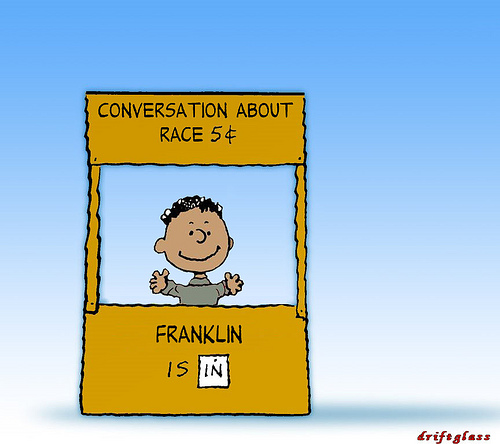
Embracing Conversations about Race in Schools.


By Anthony Hubbard


Discourse about race dominates American life

'Race' is the ugly word that dominates American life in a near complete negative manner despite the fact that large portions of the country voted twice to elect an African American president. The term race forces us to confront horrid factors such as institutionalized discrimination, widespread poverty and paranoia, distrust and despair, criminal justice failings, police brutality, and widespread racial discrimination.

In the current scenario, conversations about race extend well beyond the plight of millions of blacks. It covers Latinos, Asians, Muslims, and several persecuted minorities. Open up a prominent national newspaper or switch on cable news, and you'll find several horrific news stories that ensure that racism remains an omnipresent conversational topic and with good reason. At most schools and colleges, we fail to sensitize America's children about race issues at an age when their minds are very vulnerable to internalizing subtle forms of racism. Successful classroom engagement is essential to reducing problems related to race in our society.

Educators must engage in race-related topics objectively

In urban settings, at times, it can feel like America exists as a post-racial society, and this is often the first myth that educators should dispense off with an evidence-based approach. Before engaging the classroom on the topic of race, teachers must gather all the facts that support their argument and methodically incorporate it into their classroom environment. Interracial conversations about race are bound to be dangerous and can go off track very quickly, hence, it is essential to be prepared with as much care as possible.

Engaging in conversations about race in your classroom could impact generations of individuals, as education is the only way we can end the racial differences at the core of our society. Colleagues may not be enamored about an educator's desire to talk about race, and confronting your colleagues about its importance requires a significant degree of courage and education.

Your courage could shape the way students think about race forever

Educators must understand that opening up a dialogue about race is far better than leaving it unsaid or unspoken. Having a direct, objective, and courageous conversation about race could positively impact the life of all your students. At the least, bringing up the topic in the classroom will provide it with legitimacy, and convey the importance of discussing it with students of all races.

It is important to repeat your points in a clear, lucid manner that definitively reiterates the core of your message. Repetition is one of the most important tools in the hands of educators, and it is vital to ensure that students hear what you are saying instead of what they think you may be saying. Clarity and engagement are the best things educators can provide to their students in such discussions. Reinforce factual information without resorting to gross generalizations and statement of biases. Provide students with the platform to air their views and encourage arguments that steer clear of emotional agitation and name-calling. Allow all students, not just minority students, to state what they feel so that you can understand how incorrect opinions can be altered for good.

Expect discomforting discussions and arguments

One factor educators cannot control is a student's previous engagement with racism, picked up from the world around them. Naturally, discussion of such a controversial topic is bound to lead to awkward and discomforting situations. As individuals, we are constantly socialized into differing views on race based on our external environment.  This can lead to excessive degrees of cognitive dissonance when one person's opinions do not align with the opinions of the surrounding others. As an educator, you must allow students to argue with you and each other without 'otherizing' the opposite views or views you may completely disagree with.

Educators may need to set basic standards for decorum before proceeding with a discussion about race. Elucidate to the students the importance of rational conversations based on facts and logic instead of emotional conversations based on inherent stereotypes and biases. Educators must strive to normalize the presence of differing perspectives before clearly imparting the fundamental mistakes behind certain views. When you are trying to explain to a student why, for example, constantly passing jokes about all blacks being thieves, is incorrect, you should not belittle a student, but expose the dangerous statements and very real statistics behind such statements. Make the intellectual appeal and not the emotional appeal.

Speak the truth and encourage students to do the same

Beyond all else, the truth requires absolute courage. Share your experiences with racism and its impact on individuals in your life. Share your truthful opinions even if it may be unpopular with colleagues and students. When educators share their honest opinions, their colleagues and students may be able to point out inherent misconceptions and mistakes.

Conversations about race can be a two-way learning experience and you may become aware of your incorrect beliefs and misconceptions, which may have seemed based on facts. The truth is capable of setting both you and your students free. Addressing honest misconceptions and incorrect opinions are much easier once heartfelt sentiments have been shared.

Accept a lack of closure

Conversations about race will typically provide no conclusion, and at the very least, competent educators can encourage students to think differently about long-held beliefs. As an educator, your primary job is to ensure that students are aware of the severity of the problem at hand and encourage them to empathize with the problems of millions of people around the country.

At the end, students should be able to realize that, classroom discussions cannot provide closure for burning issues that are not closed in the real world. At the very least, students must be sensitized to the plight of racial minorities, and as a result of your discussion, they could be encouraged to seek tangible solutions to the multi-faced problems at hand.

Friday, March 25, 2016

How to Solve Systemic Racism


 Although racism has been largely banned in America since many decades now, it is still a reality faced by hundreds of thousands of colored people across the country. It is silent, and it may not be apparent at first, but careful observation of various social systems reveals the fact that is, unfortunately, a part of every aspect of our society. Boys and young men of color are denied many opportunities due to systemic racism, and there is very little that the oppressed individuals can do to help themselves.

Interconnection of the education system with other parts of society

Our society is held up by the contribution of various pillars apart from education, including health systems, criminal justice systems, housing system, employment system, and even the community. Educational institutions, over time, have become more and more sensitive towards boys and young men of color, and have become one of the primary drivers towards providing equal opportunity. However, leaving racialization untouched in all the other parts of the society does not provide enough of a foundation to allow these boys and young men to gain a foothold in the society.

The problems of race-neutral policies

The most basic attempt towards fighting racism is to put “race-neutral” policies in place, with the hopes that it will create a level playing field for all the people of this nation. However, by observing who has benefited the most from this kind of reforms, it becomes clear that “race-neutral” policies are not very helpful towards the colored youth. For instance, government programs such as Social Security, 30-year mortgages and the GI Bill contributed heavily towards the benefit of the white middle class, but were not very effective in supporting African Americans. Such policies have ignored the difference in starting points for people of color and the possibility of racial segregation within the system, leading to limited success in execution.

How a proper policy system should be developed

Instead of simply releasing a general policy for people of all races, it is important to acknowledge the fact that it needs to target communities of color so as to have the desired outcome. Presently, there are significant disparities in income, education, and healthcare amongst colored people and the whites in America, and this leads to problems like lower life expectancy, lower accumulated wealth and higher rates of incarceration. The policies that allow the prevalence of structural racism generally shows the following characteristics:

Consideration of legacy: Although this can be used to correct historical injustices, many policies that consider the legacy of a person has a high chance of allowing systemic racism. 

Segregation of risk and available resources: Distributing the available resources according to the associated risk, such as redlining, zoning policies, and so on.

Differential valuation of races: Propagation of certain histories that provide a lopsided view of colored people.

To reduce systemic racism, we need to involve colored people in the development of policies and target incentives towards colored boys and young men to help increase their civic participation. It also should address the disparities in the financial situation of people of color and reduce the barriers towards resources. With proper policy planning, racism can be removed from the systems that support our society.

Featured Post

The Need of the Hour - To Educate Boys and Young Men of Color

A nation is formed by the contribution of every single one of its citizens. It grows, flourishes, progresses alongside its people. ...