By
Anthony Hubbard
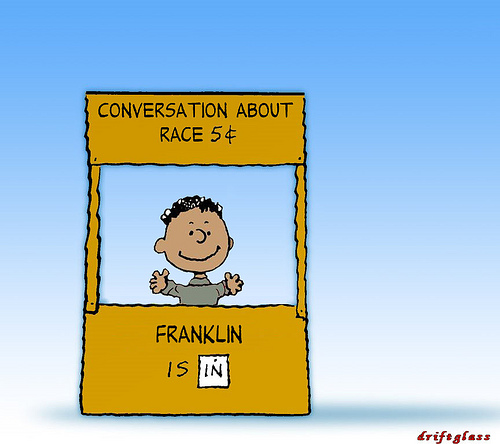
Discourse about race
dominates American life
 'Race'
is the ugly word that dominates American life in a near complete negative
manner despite the fact that large portions of the country voted twice to elect
an African American president. The term race forces us to confront horrid
factors such as institutionalized discrimination, widespread poverty and
paranoia, distrust and despair, criminal justice failings, police brutality,
and widespread racial discrimination.
'Race'
is the ugly word that dominates American life in a near complete negative
manner despite the fact that large portions of the country voted twice to elect
an African American president. The term race forces us to confront horrid
factors such as institutionalized discrimination, widespread poverty and
paranoia, distrust and despair, criminal justice failings, police brutality,
and widespread racial discrimination.
In
the current scenario, conversations about race extend well beyond the plight of
millions of blacks. It covers Latinos, Asians, Muslims, and several persecuted
minorities. Open up a prominent national newspaper or switch on cable news, and
you'll find several horrific news stories that ensure that racism remains an
omnipresent conversational topic and with good reason. At most schools and
colleges, we fail to sensitize America's children about race issues at an age
when their minds are very vulnerable to internalizing subtle forms of racism.
Successful classroom engagement is essential to reducing problems related to
race in our society.
Educators must engage in
race-related topics objectively
In
urban settings, at times, it can feel like America exists as a post-racial
society, and this is often the first myth that educators should dispense off
with an evidence-based approach. Before engaging the classroom on the topic of
race, teachers must gather all the facts that support their argument and
methodically incorporate it into their classroom environment. Interracial
conversations about race are bound to be dangerous and can go off track very
quickly, hence, it is essential to be prepared with as much care as possible.
Engaging
in conversations about race in your classroom could impact generations of
individuals, as education is the only way we can end the racial differences at
the core of our society. Colleagues may not be enamored about an educator's
desire to talk about race, and confronting your colleagues about its importance
requires a significant degree of courage and education.
Your courage could shape
the way students think about race forever
Educators
must understand that opening up a dialogue about race is far better than
leaving it unsaid or unspoken. Having a direct, objective, and courageous
conversation about race could positively impact the life of all your students.
At the least, bringing up the topic in the classroom will provide it with
legitimacy, and convey the importance of discussing it with students of all
races.
It
is important to repeat your points in a clear, lucid manner that definitively
reiterates the core of your message. Repetition is one of the most important
tools in the hands of educators, and it is vital to ensure that students hear
what you are saying instead of what they think you may be saying. Clarity and
engagement are the best things educators can provide to their students in such
discussions. Reinforce factual information without resorting to gross
generalizations and statement of biases. Provide students with the platform to
air their views and encourage arguments that steer clear of emotional agitation
and name-calling. Allow all students, not just minority students, to state what
they feel so that you can understand how incorrect opinions can be altered for
good.
Expect discomforting
discussions and arguments
One
factor educators cannot control is a student's previous engagement with racism,
picked up from the world around them. Naturally, discussion of such a
controversial topic is bound to lead to awkward and discomforting situations.
As individuals, we are constantly socialized into differing views on race based
on our external environment. This can
lead to excessive degrees of cognitive dissonance when one person's opinions do
not align with the opinions of the surrounding others. As an educator, you must
allow students to argue with you and each other without 'otherizing' the
opposite views or views you may completely disagree with.
Educators
may need to set basic standards for decorum before proceeding with a discussion
about race. Elucidate to the students the importance of rational conversations
based on facts and logic instead of emotional conversations based on inherent
stereotypes and biases. Educators must strive to normalize the presence of
differing perspectives before clearly imparting the fundamental mistakes behind
certain views. When you are trying to explain to a student why, for example,
constantly passing jokes about all blacks being thieves, is incorrect, you
should not belittle a student, but expose the dangerous statements and very
real statistics behind such statements. Make the intellectual appeal and not
the emotional appeal.
Speak the truth and
encourage students to do the same
Beyond
all else, the truth requires absolute courage. Share your experiences with
racism and its impact on individuals in your life. Share your truthful opinions
even if it may be unpopular with colleagues and students. When educators share
their honest opinions, their colleagues and students may be able to point out
inherent misconceptions and mistakes.
Conversations
about race can be a two-way learning experience and you may become aware of
your incorrect beliefs and misconceptions, which may have seemed based on
facts. The truth is capable of setting both you and your students free.
Addressing honest misconceptions and incorrect opinions are much easier once
heartfelt sentiments have been shared.
Accept a lack of closure
Conversations
about race will typically provide no conclusion, and at the very least,
competent educators can encourage students to think differently about long-held
beliefs. As an educator, your primary job is to ensure that students are aware
of the severity of the problem at hand and encourage them to empathize with the
problems of millions of people around the country.
At
the end, students should be able to realize that, classroom discussions cannot
provide closure for burning issues that are not closed in the real world. At
the very least, students must be sensitized to the plight of racial minorities,
and as a result of your discussion, they could be encouraged to seek tangible
solutions to the multi-faced problems at hand.