Showing posts with label YouthBuild. Show all posts

Monday, August 7, 2017

Educational Impact: Why Student Voices Matter on School Boards


In spring 2016, the U.S. Census Bureau released a stunning figure: topping just over 75 million, the Millennial generation finally surpassed Baby Boomers in population. These young people, ages 18-34, are rapidly becoming America’s largest generation with an economic and political clout to match. But even though younger voters have been an instrumental part of political and cultural shifts in America over the last several years, there is one place young people are still fighting to be heard: school.

More Millennials have bachelor’s degrees than any other generation before them and, yet, whether you fall on the younger or older end of the generational spectrum can determine a lot about your student rights.

Since school boards were first established in Massachusetts in 1862, Americans have cultivated a rich history of democratic representation and local control in education. Whether a parent or a business owner, you have the chance to hold a direct voice in public and private schools of all kinds.
However, if you are a student, this choice often does not exist.

American school boards are filled with representatives from across the political spectrum at the state and local levels, but too often they have failed to include those directly affected by the choices of the board: students.

A few universities, traditional public schools, and charter schools have been testing student representation, but more often than not, students are the very demographic continuously lacking representation by their governing bodies. As a student, you simply don’t have a say in the decisions impacting your future. How fair is that?

Recently, one Rutgers faculty member raised this very concern. While the university’s Board of Governors had representation from interested parties and alumni, often these board members were 10-40 years removed from university life. The members were completely unaware of new problems affecting current students, such as the need for mental health services and basic changes in curriculum.

The same can be said for schools across America; and not just at the college level.
Over a 4-month period in 2016, U.S. Bureau of Labor Statistics (BLS) reported that nearly 21 million youth between 16-24 were employed in the U.S., and these numbers demonstrate the responsibility and influence young people have in their communities. That influence is only growing. So, why can’t these students – who are talented and hardworking enough to hold jobs - also have a voice and a vote when it comes to their education?

This lack of student rights across America raises concerns about the nature of our educational environment itself.

When economic and political interests can carry more weight on school boards than the concerns of students, it is evident that a democratic and student-centered approach to education is lacking. Allowing students to vote in the highest positions of school districts, university leadership, and traditional public or charter school governance demonstrates a strong commitment to student success.

Student representation brings forth fresh perspectives and on-campus knowledge otherwise unknown to school boards, but it also more appropriately reflects the vested interest young people have in their own futures and our American communities overall.

Thursday, March 16, 2017

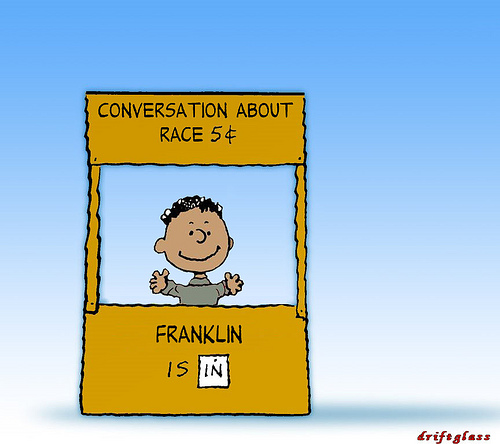
Embracing Conversations about Race in Schools.


By Anthony Hubbard


Discourse about race dominates American life

'Race' is the ugly word that dominates American life in a near complete negative manner despite the fact that large portions of the country voted twice to elect an African American president. The term race forces us to confront horrid factors such as institutionalized discrimination, widespread poverty and paranoia, distrust and despair, criminal justice failings, police brutality, and widespread racial discrimination.

In the current scenario, conversations about race extend well beyond the plight of millions of blacks. It covers Latinos, Asians, Muslims, and several persecuted minorities. Open up a prominent national newspaper or switch on cable news, and you'll find several horrific news stories that ensure that racism remains an omnipresent conversational topic and with good reason. At most schools and colleges, we fail to sensitize America's children about race issues at an age when their minds are very vulnerable to internalizing subtle forms of racism. Successful classroom engagement is essential to reducing problems related to race in our society.

Educators must engage in race-related topics objectively

In urban settings, at times, it can feel like America exists as a post-racial society, and this is often the first myth that educators should dispense off with an evidence-based approach. Before engaging the classroom on the topic of race, teachers must gather all the facts that support their argument and methodically incorporate it into their classroom environment. Interracial conversations about race are bound to be dangerous and can go off track very quickly, hence, it is essential to be prepared with as much care as possible.

Engaging in conversations about race in your classroom could impact generations of individuals, as education is the only way we can end the racial differences at the core of our society. Colleagues may not be enamored about an educator's desire to talk about race, and confronting your colleagues about its importance requires a significant degree of courage and education.

Your courage could shape the way students think about race forever

Educators must understand that opening up a dialogue about race is far better than leaving it unsaid or unspoken. Having a direct, objective, and courageous conversation about race could positively impact the life of all your students. At the least, bringing up the topic in the classroom will provide it with legitimacy, and convey the importance of discussing it with students of all races.

It is important to repeat your points in a clear, lucid manner that definitively reiterates the core of your message. Repetition is one of the most important tools in the hands of educators, and it is vital to ensure that students hear what you are saying instead of what they think you may be saying. Clarity and engagement are the best things educators can provide to their students in such discussions. Reinforce factual information without resorting to gross generalizations and statement of biases. Provide students with the platform to air their views and encourage arguments that steer clear of emotional agitation and name-calling. Allow all students, not just minority students, to state what they feel so that you can understand how incorrect opinions can be altered for good.

Expect discomforting discussions and arguments

One factor educators cannot control is a student's previous engagement with racism, picked up from the world around them. Naturally, discussion of such a controversial topic is bound to lead to awkward and discomforting situations. As individuals, we are constantly socialized into differing views on race based on our external environment.  This can lead to excessive degrees of cognitive dissonance when one person's opinions do not align with the opinions of the surrounding others. As an educator, you must allow students to argue with you and each other without 'otherizing' the opposite views or views you may completely disagree with.

Educators may need to set basic standards for decorum before proceeding with a discussion about race. Elucidate to the students the importance of rational conversations based on facts and logic instead of emotional conversations based on inherent stereotypes and biases. Educators must strive to normalize the presence of differing perspectives before clearly imparting the fundamental mistakes behind certain views. When you are trying to explain to a student why, for example, constantly passing jokes about all blacks being thieves, is incorrect, you should not belittle a student, but expose the dangerous statements and very real statistics behind such statements. Make the intellectual appeal and not the emotional appeal.

Speak the truth and encourage students to do the same

Beyond all else, the truth requires absolute courage. Share your experiences with racism and its impact on individuals in your life. Share your truthful opinions even if it may be unpopular with colleagues and students. When educators share their honest opinions, their colleagues and students may be able to point out inherent misconceptions and mistakes.

Conversations about race can be a two-way learning experience and you may become aware of your incorrect beliefs and misconceptions, which may have seemed based on facts. The truth is capable of setting both you and your students free. Addressing honest misconceptions and incorrect opinions are much easier once heartfelt sentiments have been shared.

Accept a lack of closure

Conversations about race will typically provide no conclusion, and at the very least, competent educators can encourage students to think differently about long-held beliefs. As an educator, your primary job is to ensure that students are aware of the severity of the problem at hand and encourage them to empathize with the problems of millions of people around the country.

At the end, students should be able to realize that, classroom discussions cannot provide closure for burning issues that are not closed in the real world. At the very least, students must be sensitized to the plight of racial minorities, and as a result of your discussion, they could be encouraged to seek tangible solutions to the multi-faced problems at hand.

Tuesday, July 26, 2016

Effective Instructional Practices for Educators Working with Students Afflicted with Bipolar Disorder


By Anthony L. Hubbard

Despite the advances in designing instructions for students with learning disabilities, a lot of educators across the country still face significant challenges in addressing the needs of students who suffer from behavioral and emotional disorders. To add to this existing conundrum, there are a lot of students exhibiting bipolar characteristics who remain undiagnosed. Despite the existing federal mandates to better integrate disabled students with their peers, the plight of educators has not been addressed sufficiently. Let us take a closer look at the classroom characteristics of bipolar disorder.

·      Impact on cognitive and academic functioning – Adolescents and children with bipolar disorder struggle in the classroom with regards to their cognitive functioning and academic achievement. There have been a lot of studies exploring neurocognitive impairments in students with bipolar disorder. It has been found that these students score more on their verbal measures than on their spatial-visual measures, suggesting that they have difficulties with math and decoding of nonverbal social cues. Studies have also shown that students with bipolar disorder are impaired in verbal memory, executive functions, self-monitoring, systematic problem-solving, planning, set-shifting/inhibition, and spatio-visual tasks. 

·       Impact on social functioning – Studies have shown that students with bipolar disorder tend to have few friends. Children suffering from this condition have also reported a lot of difficulties with their peers, and parental reports have more or less confirmed these difficulties. In one of the studies, teachers reported that children in the age group of 8 to 11 had moderate to severe difficulties with interpersonal skills, antisocial behavior, and self-management. They were also reported to exhibit higher levels of aggression that their peers.

Classroom accommodations

Students who have bipolar disorder can benefit a lot from environments that reduce distractions and help them in organizing and attending to tasks. Here are a few helpful tips.

·      Frequent fluctuations in energy and mood – Make sure that the instruction and scheduling you provide allow for flexibility. Minimize the surprises and distractions, and maintain a stable environment with consistent expectations. It will provide the students with predictability and structure, and reduce the level of undesirable reactivity to the instructional demands.

·      Decreased stamina and low tolerance – Pay attention to the characteristics of agitation, fatigue, tolerance, and frustration levels that can magnify the bipolar symptoms. Modify the instructional pace, opportunities to practice, activity level, work demands, and the students’ degree of interaction with their peers.

·      Non-compliance and irritability due to rapid mood cycling – Provide your students with additional time to assimilate and practice academic skills. Use strategies like “big ideas” and categorization, graphic organizers, concept mapping, and guided notes.

·      Irritability and anxiety – Make a picture schedule of the sequence of activities that the student has to go through during the day. It will help you to preplan better. If there are going to be any changes in the daily activities or the classroom environment, make sure that you give your student advanced notice. Develop a “down time” plan for the unstructured periods in a day.

·       Regulating emotion and performance – Teach your students to develop long and short term goals. Use visual organizers and daily planners, assignment completion checklists, to-do lists and provide more feedback. If there is a manic episode, assist students in taking up more realistic projects and extracurricular activities. Work with their parents to develop a more structured and consistent routine across their school and home environments.

Social and behavioral management accommodations

While medication has known to assist students in controlling their behavior, they are reactive to fluctuations in their impulses, moods, and the surrounding environmental stimuli. Here are a few strategies to help them manage their behavior.

·       Staff knowledge and response

o   Maintain calm, positive, patient, firm, encouraging, and consistent interactions with the students
o   Educate the school personnel about the disorder
o   Facilitate long-term changes to their lifestyle through positive, proactive, and functional interventions and strategies
o   Ensure that there is a “safe” adult that the student may seek out when he/she is feeling overwhelmed

·       Behavioral/social, vocational, and academic deficits

o   Design interventions to address the skill deficits that result from the disorder
o   Foster an inclusive environment in the classroom through open discussion, peer mediation, and support. Protect the students from rejection or ridicule and set the occasion for collaborative, positive working relationships.
o   Include the students in more social skills groups, and increase their lunch and playground time supervision, so that you can avert any problems during those times
o   Identify the possible triggers that precede loss of control
o   Allow the students to take walks or breaks when they become frustrated by the academic or social demands
o   Have a game plan for managing crises, explicit instructions for managing unsafe behavior, backup plans if the safe place does not work, and recovery procedures for the people involved in the crisis. 

Most of the children who are diagnosed with bipolar disorder are prescribed medication to address their symptoms and improve their functioning. They undoubtedly result in a number of side effects. Antidepressants and mood stabilizers can impact their attention and focus, cognitive functioning, alertness, learning, cognitive functioning, stamina, and memory. It also causes a lot of physical side effects like increased thirst and frequent urination, not to mention rebound effects like weepiness, irritability, and hyperactivity. Instructors need to understand all possible side-effects and work with parents and medical professionals to determine whether their in-school medication schedule must be adjusted.

Sources:

Tuesday, June 28, 2016

How Can Educators Create an Effective Connected Classroom?

A connected classroom is a smart-learning environment that is open to the outside world. With this approach, students get to learn from real-life situations and connect with other learners across the globe. With the widespread use of internet and web 2.0 technologies, creating connected classrooms has become much easier. Before we look at the web tools that you can use to open the classroom doors to a global audience, let us look at some of the academic advantages of adopting such an approach.

Connected classrooms can help students:
  • Practice and learn a foreign language with native speakers of the tongue
  • Discuss problems with other learners from far off locations
  • Invite experts in a particular field to the virtual classroom and learn from them
  • Expose themselves to other cultures and develop a more holistic global awareness
  • Set up virtual trips to places of interest
Skype and Google Hangout are great tools to create a connected classroom. They stand out for a number of reasons:

  • They are completely free to uset is easy to set them up and you do not need any in-depth technical knowledge to operate them
  • They are web-based and don’t require software installation
  • You can do both video and text chat on them 
  • They offer group calling services
  • Hangout videos and Skype calls can be recorded and shared with anybody
    Let us take a look at a practical way in which we can use Google Hangout and Skype to create a connected classroom

The Mystery Hangout/Skype

A Mystery Hangout/Skype is an educational classroom game where students from different parts of the country get to meet each other on Skype or through Hangout video and get to ask each other questions about each other's locations. The aim of this game is to help the students guess the location of their peers’ class. In the process, they get to practice a number of academic skills like web searching, speaking, note taking, writing and a lot more.

This activity is suitable for children of any age group and can also be used to teach subjects like geography, history, mathematics, languages and science.  There are various ways in which you can go about selecting the class to partner with. For instance, you can use the Hashtag #mysteryskype or go to this page to find out more about the different classes that are featured there. If you want to organize a Mystery hangout for your class, you can check Google Plus’ Mystery hangout Community. If you find a class that you want to connect with, get in touch with its teacher and set up a meeting. But before you get started with the Mystery Hangout/Skype class, make sure that your students are adequately prepared. Here are a few handy tips to get them ready for their first connected learning experience:
  • Make sure that your students fact check the information that they are going to provide in their answers. They can use the internet to look up information on their geographical location, the population of the city they live in, the languages they speak, the historical monuments, their city’s economic mainstay and more. 
  • If you want to connect with classes that are in a different time zone, you need to know the time differences between both the locations. You can use the following tools to overcome the problem:
If you want your students to make the most of the time they spend connecting with their guest class, make sure that you assign each one of them a specific task to carry out. Some of the roles include – greeters (the students who will greet the guests when they connect), the questioner (students who pose the questions), note takers (students who are entrusted with taking detailed notes) and photographers (students who are entrusted with taking pictures during the call). If you want a more detailed web resource with a list of tasks that you can assign to your students, check out this page.

Friday, September 4, 2015

Problem-based Learning in Secondary Schools


As student-centric study modules grow popular, so do problem-based learning techniques in academic institutions. Problem-based learning module being a subset of Project-Based Learning, can help expand the thinking capabilities of students, especially their critical thinking skills while also helping them pick up useful skills and knowledge in the process. Students do not just stop at what they are being taught in a lecture format, but also question and analyze it, which can help broaden the learning capabilities beyond the confines of what a textbook has to offer. They naturally hone their analytic skills in the process, which can prove to be a valuable asset even in non-academic settings down the line. It does not come as a surprise that problem-based learning is referred to as a 'learn to learn' methodology, as students do not learn by rote or learn by doing, but learn so they can solve problems. This makes the learning experience both fruitful and interesting. Since they work in groups to solve the problem, it also promotes a collaborative and interactive learning experience. Let's take a look at when and how PBL can be implemented.

How to implement PBL models

The first thing that you need to know about implementing a PBL model is that there's more than one way to do it. For starters, you want to frame a problem that gets close to defining the type of problems that real-world professionals in the field solve on a daily basis, even if it may not be of the same level of complexity. Framing the problem is one of the most important aspects of the process, and educators can afford to get creative with the process, provided the problem is within the boundaries of question and reason. Of course the problem should be such that it has multiple answers and there are multiple ways to get to the answers. For instance, an educator teaching the concept of economics can frame a question such as- How will the upcoming budget and market situation affect your purchase? The commodity that is being purchased can be anything from real-estate assets to automobiles.

The answer itself is not as important as the thought-process, questioning and learning that occur during the process, and this is the basic premise of a problem-based learning module. Once, the problem is presented, the students can be divided into multiple groups so they can discuss the problem statement and brainstorm possible solutions. This is also when students research on the subject and exchange information with their fellow-team members, and where the actual learning occurs.

Pain points while implementing PBL techniques

No doubt, PBL techniques sound like an effective way to teach but implementing it needs quite some work on the educator's part, as you may have already guessed. The educator needs to understand that many variables come into the picture in a PBL environment. One challenge that educators face is to ensure that the problem statement touches all the learning points that the students are expected to learn as a part of the curriculum. Also, given the time constraints and the vast curriculum, educators may find it difficult to implement a PBL technique in each and every concept that is being taught. Educators may also have difficulties framing a PBL module for certain subjects like English. Educators should evaluate if a PBL technique has more value to offer over tradition teaching style, and if it is a good fit before they decide when and where it can be implemented. The next step is to assist students while they brainstorm solutions. Educators should primarily act as mediators while implementing a PBL assignment, but they should also be able to gauge when students need a small forward nudge when they are stuck in a tricky spot. Classroom management is another pain point that PBL may present, depending on the size of the class.  Many of these pain points can be addressed in secondary school programs such as those that incorporate innovation lab models.

Students get to participate in an exclusive program that goes beyond the traditional curriculum, wherein they meet professionals from the field. They work with a team to gain hands-on experience on the subject, whether it is by designing or utilizing tools to find a solution. Since the Design Studio focuses on STEM areas of learning, students have a holistic learning experience by understanding how they are interlinked with each other. This when combined with the core curriculum, can allow students to get a better grasp of the subject with real-world experience.

Monday, August 31, 2015

Back to the One Room School House


What We Can Learn From the One Room School House in Today's Educational System

Modern schooling is all about efficiency, and what better way to drive efficiency in a classroom setting than group students based on their skill levels (or age) and employs a set teaching solution that can be utilized year after year, right? While this may look good on paper, the varied learning capabilities of students and the general academic results say otherwise. Now if you looked at the other corner, you will find an entirely different classroom setting, one where students of different age groups and learning capabilities are encouraged to learn under one roof. Yes, we're talking about the classic One Room School house setting. The One Room School house seems almost as if a fable today, but their perks over the traditional classroom remain just as relevant. In fact, there are many lessons that we can pick up from the classic schooling module, let's take a look at some of them.

Challenging the teachers and students

The problem with a traditional classroom and syllabus is that educators are confined to a specialized teaching formula which is repeated year after year. Now unless an educator makes the effort to periodically reinvent their teaching methods and material, alongside stay updated with the latest advancements, they fall into the same teaching pattern that is neither exciting nor challenging.  In a One Room School, educators are constantly challenging themselves to come up with new teaching methodologies that can be comprehended by students with varied learning styles and skills. The educators are expected to keep students of beginner and expert level engaged whether it is through activities or other collaborative settings in the classroom. This makes the teaching role far more satisfying than in a traditional setting.

Often, students are enthusiastic about the idea of learning, but a dull, time-tested learning curriculum that does not match with their learning style may douse their enthusiasm. When the teaching style is more in line with their aptitude and different from the usual one-fits-all solution, the students are in a better place to grasp it, which no doubt bears better results as well.

In short, the One Room School approach is interesting and fruitful for both the educator and the student.

Encouraging individual learning

A One Room School House has individualized lesson plans for each student. This can go a long way in nurturing independent learning capabilities. In a traditional classroom, boundaries and benchmarks get in the way of the students' learning curve. Benchmarks on what students are expected to achieve may deter slow-learners from reaching their full potential, as there is a constant pressure from these expectations which takes the focus off the primary goal of education- to learn. Students who are able to adapt to a traditional curriculum do not look beyond what is being taught and constrict their learning view. In One Room School Houses, students are always pushing boundaries on what else can be learned. They are not judged based on how they fare with respect to their peers and equals, and instead know that there is always scope for growth and to learn more. This hits the nail on what education should be achieving in the first place.

A holistic learning approach

The thought of a heterogeneous-level classroom may seem slightly ill-planned and chaotic at first glance, but given the right approach, it can make learning a holistic experience for students. For instance, say you have students of different learning capabilities in a music class. Managing students with different learning skills and styles may seem somewhat of a difficult task, but once you have individualized lesson plans in place it gets simpler. The key is to also have a collaborative approach while teaching. So how do you bring a collaborative approach in such a diverse setting? You could try bringing in the high-level students to improvise and play on the spot, while the mid-level students watch them and try to pick up the chords that are being played.

You can then have the mid-level students try and play the same under the guidance of the high-level students. This also helps reinforce the basics in the high-level students, while they teach the mid-level ones. The beginner-level students can try getting the basic chords right, as the mid-level students tell them about the same. This is exactly how students with different learning skills collaborate under a One Room School House setting, making the learning experience far more interesting than otherwise.

Wednesday, April 22, 2015

Why is Single-Sex Education Important?


Boys and girls are different – there is no denying that. They have different needs and react differently in different situations. Considering this, putting them together in coeducation classes does not seem to be a really bright idea. It doesn't allow educators to care for all their needs equally. This may result in either gender feeling neglected. In order to prevent this, single-sex education systems have to be implemented. Here's how they can help:
  • Overcomes stereotypes: Talent comes in many forms. Some students are good in academics, some can paint well and some are great actors. Some excel in soccer and others in athletics. And there may be those who write very well – either stories or poems. One of the biggest problems for students in coeducational classrooms is the reinforcement of stereotypes - “Poetry is not for boys” or “Soccer is not for girls”.
These stereotypes in combination with peer pressure may result in smothering of budding talent in both boys and girls. Or, this may result in students not overtly showcasing their talents which can lead teachers to feel that those students have no talents at all. Either way, students are unable to get the attention that they deserve. On the other hand, in the single-sex education system, where a class full of boys learns to love poetry or a class full of girls plays football, the stereotypes won't even raise their heads. Single-sex systems allow students to explore all their interests without having to worry about what the other gender thinks of their choices.

  •   Makes handling puberty easier: Another advantage of single-sex classrooms is that there will be no unnecessary showing-off for the opposite sex. This is particularly beneficial when the students start hitting puberty. They can concentrate more on their studies than on the hot girl in the first row or the cute boy standing in the corridor. 
  • Caters to each sex individually: Boys are generally more boisterous and have higher energy levels than girls. They need to be engaged all the time. Not giving them enough attention can cause them to misbehave. On the other hand, a teacher cannot dedicate all of his/her attention to boys only. This will result in neglecting the girls. And, girls are less likely to speak out in coeducational classes. Single-sex educational systems are the best solutions.
  • Better academic performance: In 2007, neuroscientists from NIMH (National Institute of Mental Health) released the report of a study which clearly shows that there are physiological differences in the brains of boys and girls. They develop differently in different ages and it is important to use appropriate training methods. Approaching teaching in the same way is a mistake. Single-sex systems will allow for utilizing the correct approach that can help improve the academic performance of students.
In addition to these, single-sex systems will also provide a proper environment for students to handle their social and emotional development needs. Students can ask any question in class without hesitation or fear of embarrassment. Boys are also more likely to socialize and collaborate in a single-sex environment than in a co-ed one. And, they can show emotions openly. 

Of course, for some students, the setting may not matter at all; but, not for all. Single-sex systems have a clear advantage over co-ed ones and implementing them can provide students an environment where they will flourish.

Thursday, April 16, 2015

How Single-Gender Education Can Help African-American Boys


The rate of dropouts of African-American boys from schools is much higher than that of whites and has always been so. The former are also less likely to graduate than the latter. Clearly, there is a problem that needs to be solved. Single-sex schools have been around for a while. All-girls schools are built on the premise that they help provide equal access and opportunities for girls. But, why should boys also need such systems? Here, you will learn the advantages that such schools give boys, particularly African-Americans.

  •  Tailored curriculum:  Many educators are of the opinion that the social and educational problems faced by African-American boys can be at least addressed, if not completely solved, through single-sex schools. In such schools, the curriculum can be uniquely tailored to handle the needs of its students. There can be classes on leadership, for example. These schools can also provide opportunities to the boys, who may have otherwise been overlooked in other schools.

  •   Provide positive examples: Often, these boys lack a positive male role model or a male role model at all. Single-sex schools can cater to these boys by giving them examples of positive and negative role models. The schools can also instill the importance of education beyond their schooling. This is important because, for many of these boys, their idea of personal identity does not include education. In addition, schools can provide additional rigorous training that will help students to successfully tackle standardized tests and get enrolled in colleges.

  • Break stereotypes: The idea of “masculinity” may prevent the boys, in regular schools, from undertaking activities that can be perceived as feminine. In single-sex schools, the teachers can help them to overcome stereotypes more easily given that they boys will not have to confront girls all the time.

  • Increase college enrollment rates: This study, conducted by scholars of the University of Pennsylvania, has found that a larger proportion of students from single-sex schools attend four-year colleges compared to students of coeducational schools. This is true for both private and public schools and irrespective of student-teacher ratios, teacher quality, and other factors.

  • Instill confidence: By letting the boys know that they are expected to perform, teachers can instill self-confidence in them. The students will know that they are capable of achieving target and that there are those who believe in them.

While all of these can also be achieved through co-ed schools, it will put an additional burden on them. Not all schools will be able to bear that burden and catering specifically to African-American boys may create problems for the schools.

However, single-sex schools for African-American boys can tailor their curriculum and practices to cater to specific needs and requirements. Such schools will provide a stable and safe environment for the students to experiment and learn more about what it means to be a part of the society.

Students can also better understand what it means to be a man and that it involves more than just sexual prowess. They will understand the importance of education and learn what it takes to be a leader. Stereotypes associated with African-American males can also be overcome. Overall, single-sex schools for African-American boys will help them to lead better lives.

Tuesday, June 17, 2014

Encouraging Literacy Proficiency in Males of Color


How often do we hear academics and scholars use the phrase "One size does not fit all", when discussing a number of educational or socio-economic issues facing America? Well, one very pressing challenge that fits that description is related to the task of building literacy proficiency in males of color. 

The issue is not just about getting boys of color to complete the "must-read" curriculum.  It goes much beyond that. The real challenge lies in encouraging these young men to embrace reading and writing so that they might develop "in total" - socio-emotionally - and not simply in terms of passing an exam or moving to the next grade.

Addressing the root cause
At the heart of the problem lie many non-literary challenges that sometimes get overlooked in our eagerness to build a ready-made solution.  The tools we use to build those solutions, such as policy decisions, teaching methodologies and curriculum content, take a "one size fits all" view of the classroom. And often, as we develop and implement what we perceive to be the "ideal solution", we lose sight of the fact that we are tailoring solutions for a disparate group of students.

The Broad Prize for Urban Education[i] endows a $1 million benefit to urban school districts that can prove they have contributed significantly in the academic performance of, and reducing improvement gaps between, poor and minority students. As recently as March 2012, educational experts gathered in Washington to nominate deserving school districts for the award noticed exactly the disparity that I am talking about here. Although in this case the spotlight was on the differences between Hispanic-American and African-American students, the lessons learned are equally valid to any two (or more) groups of students. As noted by USA Today[ii]: 

"The real lesson is that we need to stop lumping blacks.....in terms of how we measure progress and in terms of policy — as "students of color." The groups have different education needs".

The report very aptly identified the root cause of the challenge that educators face when trying to encourage literacy proficiency amongst males of color in the following words:   
"Lumping the two groups together only shifts attention away from differing strategies that can work for each group."

Different strokes
Promoting literacy proficiency amongst men of color must consider the environment beyond the classroom, in order to be successful.  Afro-American students have a unique set of socio-economic and socio-emotional circumstances that make them open to a different teaching/learning style than that used for other ethnic communities. And unless educators and policy makers realize that, no policy tool or teaching method will meet with success.

Recognizing the fundamental differences between various groups of students is therefore the first step to encouraging learning within members of those groups. Once some of the social barriers to learning have been removed, men of color will respond more positively to any stimulus that aims to foster literacy proficiency amongst their ranks.

As a result of such reorganization should also come the realization that curricula currently used in traditional schools therefore deserve a second look. Teachers and educators need to understand that what a Hispanic-American student will relate to in the classroom is different from that to which an Afro-American student will respond to, which is totally divergent from that which stimulates white American students. 

The fact is that each student learns differently. And a student's ethnicity helps shape his/her learning styles. These differences in learning styles are well articulated in the text "Moore, Carol. (1992): Learning Styles - Classroom Adaptation"[iii], where the case for "Different strokes make different folks" can be made. The underlying message here is that while students may find it extremely hard to change their unique learning styles, educators should adapt their teaching methods to meet differing learning styles.

Best practices to bridge these differences
So what can we do to bridge these differences? A lot, actually! Over the years of being involved in the learning and development of youth of color, I have seen first-hand the results that certain practices can bring to bear in fostering literacy proficiency in males of color. I'd like to propose some of my "best practices" for educators to consider:


  • Cultural responsiveness: Bringing cultural sensitivity into the classroom means that teachers are aware of the learning style of their pupils, and adapt their teaching methods accordingly
  • Recognizing ability: Given the right literary environment, boys of color will shine too. Teachers should recognize their student's innate abilities to learn, and must do away with oversimplification of lessons 
  • Collaborative classrooms: Rather than promoting "individualism" in learning, help foster a collaborative literary environment
  •  Enabling text: Choose text books and other learning material for the curriculum, to which men of color can relate. Using "standard" text will make them "tune out"
  • Unapologetic learning: Choose literacy plans that don't force boys of color to be apologetic about their place in the community when learning or writing their assignments
  • Readers write & Writers read: Have students read as authors and write as readers. Fostering both these perspectives is a key element of fostering literacy proficiency  amongst males of color


[i] http://www.broadprize.org/
[ii] http://usatoday30.usatoday.com/news/opinion/forum/story/2012-05-01/education-achievement-gap-blacks-hispanics/54668664/1
[iii] http://www.ndt-ed.org/TeachingResources/ClassroomTips/Learning_Styles.htm

Featured Post

The Need of the Hour - To Educate Boys and Young Men of Color

A nation is formed by the contribution of every single one of its citizens. It grows, flourishes, progresses alongside its people. ...