On February 14, 2018, Marjory Stoneman Douglas High School, located
in Parkland, Florida, experienced one of the deadliest days of school
violence ever recorded in the United States. A lone gunman entered the
school and went on a rampage that took the lives of 17 people, with 17
more people injured because of gunshot wounds.
After the massacre, pundits scurried to the front of cameras to offer
the same tired solutions for a problem that has morphed into a national
crisis.
#Guns.
Pharmaceutical drugs.
Law enforcement negligence.
The list of whom and what to blame for the rapidly increasing number
of school violence events neglects to answer one question: How to create
safe, supportive, and trauma-responsive schools.
The Numbers Do Not Lie
Between July 1, 2013, and June 30, 2014, a combination of 48 students, educators, and visitors
lost their lives on school property in the United States. The 48 deaths
included 28 homicides, 20 suicides, one death caused by legal
intervention, and one death not determined by law enforcement. About
two-thirds of public schools reported at least one violent incident
during the 2013-14 school year.
The Center for Disease Control released a report stating almost 10% of students
participated in a physical fight during the school year. Six percent of
students fail to attend school because of what they perceived to be an
unsafe learning environment.
It is not just about violence. Students also face the growing menace
called bullying. With social media sites presenting the convenient
opportunity for bullies to unleash intimidation, we should not be
surprised that incidents of bullying have increased in the United States
public education system. During the 2015-16 school year, nearly 15% of
fourth graders and seven percent of eighth graders reported being
victims of bullying at least one time over the span of 30 days.
The question is since we all can agree that violence and intimidation
exist in the United States public school system, but what are we going
to do to stop the violence and intimidation?
Supportive Strategies to Keep Students and #Educators Safe
Academics wring their hands, as well as toss and turn at night trying
to come up with the most effective solutions for creating supportive
learning environments. A seminal book released in 2009 still has
relevance today. Five co-authors argue for a few common sense approaches to creating supportive learning environments.
Perhaps the most critical strategy involves connecting with parents
and community leaders to foster a more open and welcoming learning
environment. Parents take the lead at home by extending the classroom
learning environment, and community leaders develop programs that
encourage children and adolescents to learn year round. Another
recommendation is to sustain strong instructional that includes more
collaboration among students. The book goes on to emphasize the
importance of cohesive school leadership that concentrates more on
teaching and less on disciplining students who make mistakes.
#Trauma Response Must Improve
We cannot expect all the sound school safety first practices to
expunge school violence and intimidation. However, we can do a better
job of responding to the trauma caused by life-changing events that
occur in our public schools.
Trauma represents an event or several events when students and
educators experience physical and emotional harm that lingers for years.
Research indicates the majority of students in the American public
education system have gone through at least one traumatic event.
More than 60% of students experience a traumatic event at school by the
time they turn 16 years old. About two-thirds of students have
witnessed or been a victim of violence, with more than half of the
victims experiencing more than one violent incident.
The Consequences of Trauma
Students who go through a traumatic event develop learning
disabilities, such as having problems staying focused or forgetting
important parts of classroom lectures. Victimized students also find it
hard to maintain stable social relationships with both peers and
educators. The consequences of trauma include lower standardized test
scores and a higher incidence of suspensions and expulsions.
Effective Trauma Response Matters
Schools that implement effective trauma response programs ensure
students and educators build caring relationships, as well as pay close
attention to their physical and emotional health. Students thrive in the
classroom and educators deliver a compelling curriculum that helps
students grow personally and academically. Trauma responsive schools
create a comprehensive strategy that starts with working with local law
enforcement to create a game plan for how to respond to traumatic
events. The response can include knowing where to go during a traumatic
event and how to seek counseling after a traumatic event is over.
Here are some other ways to improve trauma response in our nation’s public schools:
· Create an educational program that discusses the meaning of trauma
· Emphasize that feeling vulnerable after a traumatic event is not a weakness
· Educate parents about how trauma negatively influences the learning process
· Promote safe learning environments in classrooms, hallways, and playgrounds
· Identify barriers to healing after a traumatic event
· Train educators to detect student mood changes
· Encourage confidential discussions between students and school mental health professionals
· Make sure an emotional support staff is always there for students and educators
The national debate about how to prevent and handle #school-based
trauma often misses the point. Instead of debating whether to arm
teachers or build schools that resemble prisons, the discussion about
school #safety should be more about finding ways to offer support to the
people who need it the most.
Deliver us from Crisis is a series of articles to study and eliminate those issues concerning boys of color transitioning to adulthood. In addition, I post stories of rites of passages, photos, experience and much more to inform and inspire our young men of color.
Showing posts with label Education. Show all posts
Wednesday, March 21, 2018
Wednesday, August 2, 2017
Solving The Problem Of Black Male Achievement – Less Talk, More Action
Solving The Problem Of
Black Male Achievement – Less Talk, More Action
Today,
we’ve reached a critical point in the Black Male achievement conversation –
which means it’s time to stop having a conversation and start taking action. So
far, there is no “perfect solution” that can guarantee the success of Black
males in the US – the problems of pernicious institutionalized racism, poverty,
and a system that’s built to victimize Black males are enormous.
But
there is no longer any time to waste. The problems are worse than they’ve ever
been before – as of 2014 only about 54% of
Black students graduate from high school – and Black males in the twelfth grade
have lower average reading test scores than any
other ethnic or racial group.
The
numbers don’t lie – even as colleges and high schools around the US boast about
their exceptional achievements and the bright futures of their students, it is
evident we are leaving our Black males behind.
It’s
time to stop talking about how we can promote Black male achievement – and time
to start taking action. Let’s discuss some novel strategies that could help
promote Black male achievement, and have a serious impact on the issue of the
“Black Male Achievement Gap.”
Force Schools And
Administrators To Recognize The Problem – And Take Action
One
of the biggest issues facing Black male achievement is that many schools –
especially public schools – fail to acknowledge that Black males are uniquely
discriminated against within the system.
Too
often, we hear about Black males who are rejected by administrators. They’re
written off as “bad seeds,” and sent directly to the “school-to-prison”
pipeline. This is not a myth – it’s a fact and needs to be acknowledged as
such.
Black males are 4x more likely
than white students to be suspended, and over 70% of in-school
arrests involve Black or Latino students. Not only that, Black males are 2x as
likely to not complete high school – and 68% of all inmates in our federal
prison system doesn't have a high school diploma.
We
must break down this system of apathy, hate, and institutionalized prejudice.
We must recognize that Black males are now more naturally prone to violence or
misbehavior than any other group of students – they are products of their
circumstances. Poverty, broken families, abuse – these stresses take their
psychological toll on our Black youth.
We
must force administrators and schools to acknowledge the problem of
institutionalized racism – and set aside money for programs and initiatives
that are specifically designed to increase the achievement of Black males.
Black
male mentorship programs, Rite
of Passage programming, and other after-school programs may not be the
newest solution around, but they’re proven to work. Males that have
participated in such programs have also experienced an increase in academic
performance. These programs are tailored
directly to Black youth – and can have a dramatic effect on Black male student
outcomes, and help us narrow the achievement gap.
Bring Black Male
Students Together, And Present A United Front
Our
young Black men in high school often feel targeted, victimized, or alone – and
it’s critical that we take steps to solve this issue.
Black
males must be taught the skills to navigate and advocate for themselves within
the system. They must take a united
stand and say, “no more shall we be pushed to the side and made to feel
invisible.” A radical approach is needed,
meaning getting down and understanding the root cause of the problems facing
our young men. Then force change within
a system that appears partly invested in solving or improving the educational
experience of these youth. Often, lack
of funding, time and capacity are excuses to continue the status quo. But I ask, where are the education dollars
going? -- Not too many schools in our
most economically depressed neighborhoods, not to recruit highly qualified
teachers to teach our nations most disenfranchise youth and surely not to
create pathways of opportunity for Black males who are facing a high
probability of school failure.
We
must create an environment that Black males feel welcomed, care for, loved and
nurtured. We must remove the mindset
that all Black males are destined for failure.
We must empower our males to be an active participant in their education
and make curriculum reflective of their culture and experiences. I know this is difficult to do in most
traditional school settings -- but here’s a thought experiment for you. Why
can’t we have more schools that are specifically targeted to [I almost said “at-risk,” but “at-risk” makes
it seem like it’s the student's fault] Black males or males of color for
that matter?
After-school
programs and community organizations can only do so much for our Black males.
By implementing a specialized schooling system that focuses on educating and
preparing Black males – and not on punishing them – we can arm them with the
tools they need to narrow the achievement gap and succeed in life.
There
are many of those who believe in the myth of “self-segregation” – and may not
approve of this idea. However, the fact of the matter is that the inherent
prejudice of the public and private school systems is the primary cause of much
of the Black male achievement gap.
Yes,
though no education system can be entirely free from failure, a school tailored
specifically to youth of color could implement culturally responsive programs
and classes that would provide a more engaging learning environment – and
provide students with the tools they need to succeed in their life after
school.
There Is No “Perfect
Solution” – But That Doesn’t Mean We Can’t Act Now!
If
we wait around discussing the issue of the Black male achievement gap until we
find a perfect solution, we’re leaving our Black students behind. It’s just
that simple.
So
don’t wait for a perfect solution. If you’re an educator, administrator, or a
member of the community, it’s time for action. Even if you can only help one
Black male at a time, that’s enough.
We
can’t leave our future leaders. If we work together, we can improve conditions
for Black youth – and help narrow the opportunity gap for young Black men. The
journey will be hard, and the obstacles may seem insurmountable – but our men
are worth the investment.
Thursday, July 20, 2017
Teacher Education Programs Don't Adequately Prepare Teachers For Urban Schools.
By Anthony L. Hubbard
So, you just graduated from a 4-year college with a teaching degree. You did some student teaching at a local suburban elementary school – but that’s not where your passion is. You’re interested in teaching at an urban school in the most challenging neighborhood.
Why?
Because you want to make a difference. You want to change lives. You want to teach the kids who are the neediest and help them escape a terrible situation.
Or at least, that’s what you think you want. The truth is, most teacher education programs leave you unprepared to deal with the day-to-day reality of teaching in an urban school. To be completely honest, urban schools are a tough environment – for both teacher and students.
Poverty leaves its mark on every student – and many of them cope by turning away from teachers and authority figures. They enter your classroom with distrust and guarded. Many have suffered trauma that has gone untreated, while others don’t see the importance of education.
So let us take a look at some of the most common things that surprise teachers who attempt to teach in urban schools, and discuss why education programs don’t adequately prepare teachers for this educational environment.
Relationships Are At The Core Of Your Ability To Teach
Here’s the thing about young people in urban schools – they’ve seen it all before. A white, middle-class teacher comes into their classroom, freshly out of college or Graduate school. They’re raring to go – and they want to have their “O Captain, My Captain,” moment with their class, and change their lives.
Then, as the year goes on, the teacher gets frustrated. The kids are cynical, mean, or ignoring them – and don’t seem to have any interest in learning. Teachers become snarky, disengaged and frustrated. After a year, the teacher is so discouraged that he/she leaves – probably to teach in a charter school or a cushy suburban school.
The leaving of potentially great educators happens over and over again, and the reason is simple – relationships are more important in urban schools than anywhere else. If you want to have an effect on the lives of your students, you must connect to them on a personal level, and genuinely show that you care about them.
This is in contrast to the attitude that many first-time teachers enter with; the idea that their students need “saving,” and that they’re the ones to do it. Students don't need to be saved by you. They need to be empowered. Students in this environment don’t want your pity. They want to feel normal. And if you can connect with your students, be honest with them, and create a meaningful relationship, you will get through to them.
Conflict Is Normal – And You Need To Manage It
Poverty and the stress of life associated with it takes a severe mental toll – especially on developing children. Many kids will react by becoming combative and aggressive or withdrawing completely into their shells. These behaviors are especially prevalent in teenagers and pre-teens.
Most teacher programs have a minimal focus on conflict resolution skills. These programs operate in a sort of “bubble” where your classroom is obedient, respectful, and conflict-free – and this is never the case.
You’re going to need good conflict resolution skills. If the conflicts are minor and don’t escalate, it’s best to provide your students with the tools required to solve them on their own and act as a facilitator. Because if you rely on school administrators and school resource officers to solve the conflict, you’re going to alienate yourself from your students.
Some Things Are Out Of Your Control – And That’s Okay
There is no mistake that when you teach in an urban school, within a disenfranchised neighborhood, with students living in constant state of crisis - there will be things that are out of your control. You can’t make sure all of them have a warm bed to sleep in at night, clean clothes, or enough money for lunch. You’re not their savior, and you can’t do everything on your own.
But what you can do is teach. When students are in your classroom, you’re in control, and you really can make a difference if you persist, form great relationships, and connect with your students, you will be able to watch them improve – and that’s the best feeling you can have as a teacher. Remember, the mission here is to equip your students them with a strong educational foundation that will give them a fighting chance of improving their life outcomes.
Teaching In Urban Schools Is Hard – But Don’t Be Discouraged
If you’re looking to teach in an urban school, that’s great! I’m glad that you’re thinking about using your talents to reach young people who are disadvantaged, and who may lack a strong mentor or role model.
But it’s important that you understand that this will be difficult. There is a reason that some urban schools have a 3-year turnover rate of over 50% – most teachers are not properly equipped by their education programs to handle the stresses of teaching the nation’s most challenging students.
But if you understand that you’re a teacher – not a savior, that you must build relationships with each one of your students, and that you can encourage learning by facilitating an open, safe environment for your students, you’ll have a much better chance of success. Make no mistake, there will always be students that latch on to you, and you will become their superhero, the cool teacher, their mentor - but just let it happen naturally.
It will be hard. You may want to quit. But if you persist, you’ll be rewarded – and you’ll truly make a difference in the lives of your students.
Thursday, March 16, 2017
Embracing Conversations about Race in Schools.
By
Anthony Hubbard
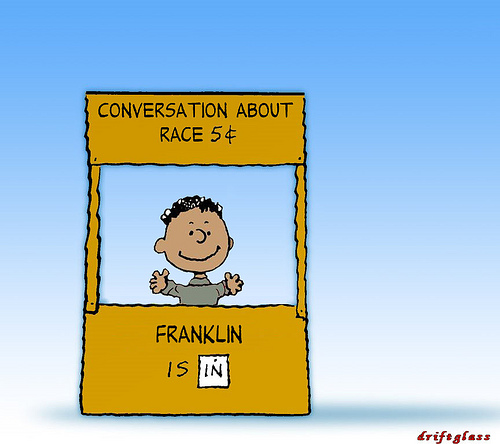
Discourse about race
dominates American life
'Race'
is the ugly word that dominates American life in a near complete negative
manner despite the fact that large portions of the country voted twice to elect
an African American president. The term race forces us to confront horrid
factors such as institutionalized discrimination, widespread poverty and
paranoia, distrust and despair, criminal justice failings, police brutality,
and widespread racial discrimination.
In
the current scenario, conversations about race extend well beyond the plight of
millions of blacks. It covers Latinos, Asians, Muslims, and several persecuted
minorities. Open up a prominent national newspaper or switch on cable news, and
you'll find several horrific news stories that ensure that racism remains an
omnipresent conversational topic and with good reason. At most schools and
colleges, we fail to sensitize America's children about race issues at an age
when their minds are very vulnerable to internalizing subtle forms of racism.
Successful classroom engagement is essential to reducing problems related to
race in our society.
Educators must engage in
race-related topics objectively
In
urban settings, at times, it can feel like America exists as a post-racial
society, and this is often the first myth that educators should dispense off
with an evidence-based approach. Before engaging the classroom on the topic of
race, teachers must gather all the facts that support their argument and
methodically incorporate it into their classroom environment. Interracial
conversations about race are bound to be dangerous and can go off track very
quickly, hence, it is essential to be prepared with as much care as possible.
Engaging
in conversations about race in your classroom could impact generations of
individuals, as education is the only way we can end the racial differences at
the core of our society. Colleagues may not be enamored about an educator's
desire to talk about race, and confronting your colleagues about its importance
requires a significant degree of courage and education.
Your courage could shape
the way students think about race forever
Educators
must understand that opening up a dialogue about race is far better than
leaving it unsaid or unspoken. Having a direct, objective, and courageous
conversation about race could positively impact the life of all your students.
At the least, bringing up the topic in the classroom will provide it with
legitimacy, and convey the importance of discussing it with students of all
races.
It
is important to repeat your points in a clear, lucid manner that definitively
reiterates the core of your message. Repetition is one of the most important
tools in the hands of educators, and it is vital to ensure that students hear
what you are saying instead of what they think you may be saying. Clarity and
engagement are the best things educators can provide to their students in such
discussions. Reinforce factual information without resorting to gross
generalizations and statement of biases. Provide students with the platform to
air their views and encourage arguments that steer clear of emotional agitation
and name-calling. Allow all students, not just minority students, to state what
they feel so that you can understand how incorrect opinions can be altered for
good.
Expect discomforting
discussions and arguments
One
factor educators cannot control is a student's previous engagement with racism,
picked up from the world around them. Naturally, discussion of such a
controversial topic is bound to lead to awkward and discomforting situations.
As individuals, we are constantly socialized into differing views on race based
on our external environment. This can
lead to excessive degrees of cognitive dissonance when one person's opinions do
not align with the opinions of the surrounding others. As an educator, you must
allow students to argue with you and each other without 'otherizing' the
opposite views or views you may completely disagree with.
Educators
may need to set basic standards for decorum before proceeding with a discussion
about race. Elucidate to the students the importance of rational conversations
based on facts and logic instead of emotional conversations based on inherent
stereotypes and biases. Educators must strive to normalize the presence of
differing perspectives before clearly imparting the fundamental mistakes behind
certain views. When you are trying to explain to a student why, for example,
constantly passing jokes about all blacks being thieves, is incorrect, you
should not belittle a student, but expose the dangerous statements and very
real statistics behind such statements. Make the intellectual appeal and not
the emotional appeal.
Speak the truth and
encourage students to do the same
Beyond
all else, the truth requires absolute courage. Share your experiences with
racism and its impact on individuals in your life. Share your truthful opinions
even if it may be unpopular with colleagues and students. When educators share
their honest opinions, their colleagues and students may be able to point out
inherent misconceptions and mistakes.
Conversations
about race can be a two-way learning experience and you may become aware of
your incorrect beliefs and misconceptions, which may have seemed based on
facts. The truth is capable of setting both you and your students free.
Addressing honest misconceptions and incorrect opinions are much easier once
heartfelt sentiments have been shared.
Accept a lack of closure
Conversations
about race will typically provide no conclusion, and at the very least,
competent educators can encourage students to think differently about long-held
beliefs. As an educator, your primary job is to ensure that students are aware
of the severity of the problem at hand and encourage them to empathize with the
problems of millions of people around the country.
At
the end, students should be able to realize that, classroom discussions cannot
provide closure for burning issues that are not closed in the real world. At
the very least, students must be sensitized to the plight of racial minorities,
and as a result of your discussion, they could be encouraged to seek tangible
solutions to the multi-faced problems at hand.
Tuesday, June 28, 2016
How Can Educators Create an Effective Connected Classroom?
A connected classroom is a smart-learning environment that is open to the outside world. With this approach, students get to learn from real-life situations and connect with other learners across the globe. With the widespread use of internet and web 2.0 technologies, creating connected classrooms has become much easier. Before we look at the web tools that you can use to open the classroom doors to a global audience, let us look at some of the academic advantages of adopting such an approach.
Connected classrooms can help students:
The Mystery Hangout/Skype
A Mystery Hangout/Skype is an educational classroom game where students from different parts of the country get to meet each other on Skype or through Hangout video and get to ask each other questions about each other's locations. The aim of this game is to help the students guess the location of their peers’ class. In the process, they get to practice a number of academic skills like web searching, speaking, note taking, writing and a lot more.
This activity is suitable for children of any age group and can also be used to teach subjects like geography, history, mathematics, languages and science. There are various ways in which you can go about selecting the class to partner with. For instance, you can use the Hashtag #mysteryskype or go to this page to find out more about the different classes that are featured there. If you want to organize a Mystery hangout for your class, you can check Google Plus’ Mystery hangout Community. If you find a class that you want to connect with, get in touch with its teacher and set up a meeting. But before you get started with the Mystery Hangout/Skype class, make sure that your students are adequately prepared. Here are a few handy tips to get them ready for their first connected learning experience:
Connected classrooms can help students:
- Practice and learn a foreign language with native speakers of the tongue
- Discuss problems with other learners from far off locations
- Invite experts in a particular field to the virtual classroom and learn from them
- Expose themselves to other cultures and develop a more holistic global awareness
- Set up virtual trips to places of interest
- They are completely free to uset is easy to set them up and you do not need any in-depth technical knowledge to operate them
- They are web-based and don’t require software installation
- You can do both video and text chat on them
- They offer group calling services
- Hangout videos and Skype calls can be recorded and shared with anybody
Let us take a look at a practical way in which we can use Google Hangout and Skype to create a connected classroom
The Mystery Hangout/Skype
A Mystery Hangout/Skype is an educational classroom game where students from different parts of the country get to meet each other on Skype or through Hangout video and get to ask each other questions about each other's locations. The aim of this game is to help the students guess the location of their peers’ class. In the process, they get to practice a number of academic skills like web searching, speaking, note taking, writing and a lot more.
This activity is suitable for children of any age group and can also be used to teach subjects like geography, history, mathematics, languages and science. There are various ways in which you can go about selecting the class to partner with. For instance, you can use the Hashtag #mysteryskype or go to this page to find out more about the different classes that are featured there. If you want to organize a Mystery hangout for your class, you can check Google Plus’ Mystery hangout Community. If you find a class that you want to connect with, get in touch with its teacher and set up a meeting. But before you get started with the Mystery Hangout/Skype class, make sure that your students are adequately prepared. Here are a few handy tips to get them ready for their first connected learning experience:
- Make sure that your students fact check the information that they are going to provide in their answers. They can use the internet to look up information on their geographical location, the population of the city they live in, the languages they speak, the historical monuments, their city’s economic mainstay and more.
- If you want to connect with classes that are in a different time zone, you need to know the time differences between both the locations. You can use the following tools to overcome the problem:
Thursday, March 24, 2016
Why We Need To Move Towards Standards-Based Learning
As of last year, there were an estimated 50 million students
in the United States who were attending public elementary and secondary
schools. Within the next few years, these children will be having full time
jobs and contributing towards the growth of the nation. It is no secret that
good education has an effect on progress of a people, which is why it is
important to ensure that education systems are constantly evolving. In this
spirit, the grading system that is employed by majority of the schools in the
USA is observed to give rise to many problems, and it will have to be changed
if we want the children of the future to be competent.
The present scenario
The present system makes a student sit through a class for
an entire year and allows progression to a higher grade once they prove their
proficiency at the end of the year. This kind of a system assumes that students
have gained expertise in their subjects before they are made to sit through
more advanced classes. But empirical evidence shows that students can progress
to higher grades even when they are not competent enough to grasp advanced
concepts.
The grading system has, for many years, been the subject of
criticism as many people become acutely aware of the effect it has on children.
One of the primary issues is that the grading system focuses on achieving
marks, instead of learning the concept thoroughly. The intrinsic motivation for
students in such a system is to get good grades, and this forces them to take
lesser risks in their learning process, instead of exploring topics that lie
beyond their current skill set.
The very approach to learning is corrupted when the message
given by an educational institution is “grades matter more than learning”. As
the students study a book with the intention of memorizing facts, their quality
of understanding the essence of the text is diminished, and this effect is
magnified as the students progress through higher levels of the education
system.
Why improvement would not really help
Many people are of the opinion that an improvement in the
education system is a necessity, but they may not be very open to completely
doing away with the grading system. Several schools around the country try to
augment the grading system by introducing innovative policies, yet these
methods do not stand the test of time. The reason that superficial improvements
to the grading system do not work is because it is psychologically flawed.
Experts of pedagogy agree that the learning process
inherently motivates students, not because they stand to gain good grades, but
because the subject matter interests them. The grading system, instead of
acknowledging this quality, forces a structure of rewards and punishments in
the hopes of spurring young minds to work harder. Studies conducted by
educational psychologists reveal that simply focusing on the assessment process
can undermine the quality of learning, as the students monitor their
performance instead of trying to grasp the nuances of the subject matter.
How to move towards standards-based learning
The process of change towards standards-based learning is
arduous and it will require the combined efforts of school administrators and
teachers, if a school hopes to use such a system in the long run. To make a
gradual move away from the grading system, a school administrator needs to
first have extensive discussions with teachers, parents and even students about
the effects of the present system. The main rebuttal people have against
changing the grading system is that it becomes nearly impossible to collect
data about a student's performance. But there are far better methods of
assessing mastery which involves gathering information about the capability of
students.
Once a considerable number of people are in support of the
idea of moving away from the grading system, a school can start to eliminate
the traditional system for the youngest students, so that the system can be
continued as they progress through their education. Instead of completely
eliminating grades, an educational institution may choose to reduce the focus
on academic success to show students that learning is more important that
scoring well.
Teachers will have a major role to play in the efforts of an
educational institution, as they will need to adapt to new methods of
assessment. There will also be considerable resistance from parents and
students alike, who will argue that excellence needs to be documented with
data. When faced with such situations, remember that the goal of a school is
not to grade students competitively, but to increase knowledge within each
student. With persistence and skill, it is possible to eliminate the grading
system and move towards a competency based learning system in the long term.
Friday, February 26, 2016
The Need of the Hour - To Educate Boys and Young Men of Color
A nation is formed by the
contribution of every single one of its citizens. It grows, flourishes,
progresses alongside its people. In the same measure, it fails to achieve its
optimal development when a section of the citizenry is denied the ability to
give their best to their homeland. In the U.S., where the fabric of society
comprises of many hues and textures, it is indeed surprising, even shocking,
that young men of color are yet to receive their due, their fair share of the
resources that the country has to give. This is most evident in the skewed
educational landscape we witness. The facts about young men of color that are
commonly known are:
- Young men of color enrolled in America’s urban schools do not demonstrate the academic excellence that paves way for successful higher education or lucrative career
- A disproportionate number of young men of color have low attendance at school and high dropout rates when compared with their counterparts
The Big Picture that is often Hidden
However, the big picture that emerges when
you start exploring why this situation exists is not quite as well known or
well publicized:
- Due to a variety of historic, cultural, social reasons, the families of these young men have been kept out of the more upscale, prosperous neighborhood, thus limiting their ability to enroll at the best urban schools in the country.
- Studies reveal that young men of color are far more likely than their peers to attend schools where the quality of teaching is below par, with fewer experienced teachers available and accessible.
- These young men are also far more likely to attend schools where educational resources are heavily limited and restricted, thus restricting their ability to take initiative for their own education in the absence of high quality teaching. These resources include science labs, libraries, athletic programs and so on.
- The schools they attend may also typically have a dearth of qualified, experienced counselors meaning that these young men of color have no one to turn to for guidance and support in making the right career choices. This is especially a huge challenge for first generation school students who come from a family where no one else has had an opportunity to study.
- A host of factors, including these prevent these young men of color from graduating from school with the necessary preparation to take up higher education at a quality institution. This means that the cycle is repeated, restricting the student’s ability to hone his inherent skills into professional qualifications that will get him a job where his full potential is utilized.
Young men of color are denied the chance to
give their best to America
The situation is a very
unfortunate one because it is not only these young men of color who are at the
losing end. It is, in fact, the country that is losing out and quite
significantly. Unfortunately, this is one aspect that does not receive the
attention it deserves. The reality is that no country can progress as well as
it should unless every section of the
population is given the opportunity to explore their own talents and skills to
the maximum. No country can flourish unless every such section has access to
resources that let them discover their inherent skills and develop them. And no
country can optimally develop and succeed unless every such section is
integrated into its workforce in areas where their skills can be leveraged to
the maximum.
In an ideal society, every
single student is given equal educational opportunities, has access to teachers
and learning resources to identify the ways in which they can excel in life.
This is a first step that lets students achieve personal success and position
themselves as an integral part of society. It also puts a full stop to the
vicious cycle of poorly educated adults failing to recognize the need to get
their children educated, thus fostering yet another generation of young men of
color unable to contribute to society and nation.
Education is Key to Safeguarding the Nation’s
Resources
Young men of color face
several prejudices, most common among them being that they are aggressive and
more likely to engage in criminal activities. The statistics that show the
immense number of young men of color engaged in unlawful activities only add
fuel to this fire. However, explore the facts with a closer look at the
causative factors and a very different picture emerges. If we are able to equip
these young men with the education they need to succeed in a constructive
career, we can effectively channelize their energies in the right way. These
students can become the men who stand first in our line of defense, who build
the businesses that will take America to new heights, who come up with
innovative ideas that will position the country as a world leader.
If we ignore that the
country is failing these young men who have untapped potential, we also close
our eyes to the fact that we are committing to reserve many, many resources to
an unproductive cause. This is because the lack of education will force many of
these current generation youngsters into the wrong path, prompting them to
engage in anti-social activities. In later life, many of these young men may
‘graduate’ into more serious crimes, requiring the investment of state and
national resources into identifying them, controlling them and incarcerating
them to keep them isolated from society.
The Great City Schools of America have already
recognized that the roots of the problem lie in the formative years of young
men of color. The 60 urban school systems have pledged to invest efforts into
eliminating the inequities that hamper the growth of these students. It is up
to every one of us to accept our share of the responsibility in ensuring that
young men of color are given the impetus, the tools to become society’s most
respected, most valuable assets instead of forcing on them a life that can only
take them and the country, with them,
Monday, November 2, 2015
How To Use Socratic Discussion In Today's Classroom To Promote Student Engagement
The Socratic method is a student-centric teaching method
that actively enhances the student’s comprehension and ability to learn.
Socrates firmly believed that effective teaching could not be achieved by mere
one-sided lecturing. He understood that students have their own individual
stores of knowledge as well as learning and when they are encouraged to build
upon these, they can learn more efficiently. He also realized that effective
teaching happens when the students are engaged deeply in the classroom
activities because they can be inspired to analyze the lesson, evaluate,
discuss it and develop their own view point upon it.
The Socratic method of teaching is an universally
applicable method that can be applied to students of any age, with any subject
matter, to achieve the most effective teaching - learning process. To apply the
method in your classroom, there are a few key aspects to understand.
The importance of asking the
right questions
The Socratic method draws students deeper into the subject
matter by encouraging them to take an active part in the learning process. One
way in which it is done is by asking questions that prompt them to consider the
problem or subject from different perspectives. In effect, questions that
require generative answers are important so that the answers become starting
points for further discussion or analysis. So a deep understanding of the
subject or problem is achieved.
Encouraging collaborative
dialogues
The teacher should encourage students to communicate their
ideas with each other, collaborate to find answers that satisfy all and to
engage in dialogues to reconcile opposing points of view. It is possible only
when students are given topics for discussion that require them to revisit
their rationale for their arguments and evaluate if their arguments are more
sound than that of others.
The process of collaborative dialogue and analysis ensures
that all the varying viewpoints upon one topic are brought into the open and
all students are exposed to them. It also encourages students to pay heed to
varying perspectives, to understand that the view of another may be more
logical and more appropriate than their own. The ability to accept other views
is very critical for effective learning and growth.
Discussing questions that
have more than one correct answer
The Socratic method is heavily reliant on getting the
students to share their views upon a specific topic or question. However, in
contrast to conventional teaching styles, the questions asked do not have just
one simple, direct solution. During the process of getting students to share
their views about solutions, the teacher should skillfully highlight the fact
that many equally viable solutions exist for the same question.
Further, the students should be asked to justify their
responses and demonstrate how and why their solution is appropriate for the
question. It enhances the student’s analytical abilities, presentation skills
and communication while also ensuring that the classroom is exposed to various
answers that are all convincing and true. It promotes their ability to think
innovatively about problems and come up with unique solutions rather than
remaining limited to traditional ones.
Tuesday, October 6, 2015
Making a Difference to Underachievers
Making a Difference to Underachievers Using the Feuerstein Method
In today’s educational landscape, it is quite common to see students categorized as ‘intelligent’, ‘average’, ‘unintelligent’, ‘underperformers’ and so on. The view that students have a pre-determined, pre-set ‘level’ of intelligence and ability to learn is quite prevalent and this is a widely accepted view as well. Academicians and educators across the country, even the world, really believe that not all students can achieve the same academic goals because of the differential intelligence levels that they are endowed with. This gives credence to the belief that intellect or intelligence is an inborn ‘skill’, with each person being gifted with a specific limit of it. This also means that there are only a select few who can truly excel even when the best teachers are employed and they are leveraging the most modern, most effective teaching techniques to impart knowledge.
This view is flawed in more than
one way because there is reason to believe that the so called ‘underperforming’
student does not have the same intelligence or ability to grasp complex
academic concepts as the so- called ‘intelligent’ student. Further, there is no
scientific basis for the assumption that everyone is born with different
intelligence levels, which cannot be enhanced or drawn out in any way as they
progress through life and through different educational experiences. As Nobel
Prize nominee, clinical, developmental and cognitive psychologist Ruevin
Feurestein explained, ‘intelligence is not fixed but modifiable’. It is the
responsibility of the teacher or academician to devise a teaching system or
strategy that helps every student achieve higher levels of intelligence by
drawing upon his or her own hidden reserves.
An
overview of the Feuerstein Method
After fleeing the Nazi invasion,
Feurestein leveraged his psychology degree to teach young survivors of the
Holocaust in his new home in Palestine. The needs of these children prompted
him to take up a career that would address both psychological and educational
needs of refugee children. In the 1950s, Feurestein was involved in working
with children from Moroccan, Berber and Jewish families and he found that those
who initially scored low on IQ tests showed remarkable improvement when they
were given special psychological and academic attention.
This encouraged him to start
viewing intelligence as a modifiable characteristics rather than a fixed one,
as the traditional view point held. He started researching various ways in
which too ‘teach’ intelligence even as he expounded the theory that the
students who excelled and who were believed to be intelligent were actually
leveraging their ability to learn more effectively than others.
The prevailing means and tools for
measuring intelligence were flawed and inadequate, in his view, because they
failed to indicate that all students could be elevated to the same level of
intelligence provided they were taught how to do it. As a new, more effective
and more accurate method of evaluation, Feurestein came up with the dynamic
assessment method, as it is known today. His focus was on identifying and
evaluating the inherent cognitive flexibility in the child that represents the
ability to learn. Once this evaluation is done, teaching methodologies can be
tweaked so that these abilities are used optimally. This view was dramatically different from
what was commonly accepted then and it transformed the way people looked at
‘intelligence’ and its impact on academic performance.
Taking his study further,
Feurestein began to devise methodologies to help children who were not
performing well academically and work on their weaknesses, putting them on
track for dramatic improvements. ‘Mediated relationship’, he discovered, lay at
the foundation of meaningful teaching strategies. These methodologies have
brought a ray of hope into the lives of not just poorly performing children but
also children with special needs such as those affected by Down’s Syndrome,
palsy, stroke or other conditions.
The
journey from ‘poor performer’ to ‘gifted’ status
Feuerstien’s methods can be used with amazing success in every
academic field to teach and engage urban students most effectively. The success
of the methods hinge on our ability to understand and accept that intelligence
is limitless. Most urban schools tend to look at students as deficits; they
believe that the students can only advance so far. However, this is far from
the truth that Feuerstien has proven beyond doubt. In my personal experience,
wherever I have implemented Feuerstien’s method, the results have been simply
dramatic and uniformly impressive. I
have taught several boys and young men of color with these tools and witnessed
the improved academic performance from close quarters.
One important contributing factor for this impressive change is that
a growth oriented mindset is essential. A tremendous amount of growth is
possible when this correct approach is adopted to take a low performing student
and turn them into a “gifted” student. This growth mind set is often lacking in
academic environments where ‘underachievement’ is the expected outcome. Sadly,
this is true of many schools where children of color are automatically tagged
with the ‘underperformer’ label. The teachers may, inadvertently, believe that
these students are incapable of improving their academic excellence and thus
feel that investing more attention or time on them will not yield results. In
reality, it is the opposite that is true.
The teacher has to actively believe that the students can excel and
this belief should be evident every single day in the teaching strategy,
technique and tools utilized. This
positive mindset, that the underperforming student is no different from their
academically proficient peers, is the foundation block on which the students
builds their new skills to learn more effectively and efficiently.
Another critical understanding for both teacher and student
is that learning and intelligence are not two different aspects. Intelligence is
the knowledge of identifying where knowledge can and should be applied, i.e.: a
meta knowledge of sorts. This knowledge comes when the learner is actively
involved in the learning process- understanding why they are studying something
and where they might apply it. When the students make these connections, they
can apply the knowledge intelligently to various situations. This is not all-
they can also learn more advanced concepts easily because the grounding of
knowing why they need it and how to use it is already present in them. This is
how the transformation from poor performers to exceptional students takes place
with the right teaching methodologies being implemented.
Subscribe to:
Posts (Atom)
Featured Post
The Need of the Hour - To Educate Boys and Young Men of Color
A nation is formed by the contribution of every single one of its citizens. It grows, flourishes, progresses alongside its people. ...
-
By Anthony Hubbard Discourse about race dominates American life 'Race' is the ugly word that dominates American...
-
If you’ve been paying attention to what’s happening in our educational institutions, you’d probably have noticed t...
-
On February 14, 2018, Marjory Stoneman Douglas High School, located in Parkland, Florida, experienced one of the deadliest days of school...