Deliver us from Crisis is a series of articles to study and eliminate those issues concerning boys of color transitioning to adulthood. In addition, I post stories of rites of passages, photos, experience and much more to inform and inspire our young men of color.
Showing posts with label equity. Show all posts
Monday, August 7, 2017
Educational Impact: Why Student Voices Matter on School Boards
In spring 2016, the U.S. Census Bureau released a stunning figure: topping just over 75 million, the Millennial generation finally surpassed Baby Boomers in population. These young people, ages 18-34, are rapidly becoming America’s largest generation with an economic and political clout to match. But even though younger voters have been an instrumental part of political and cultural shifts in America over the last several years, there is one place young people are still fighting to be heard: school.
More Millennials have bachelor’s degrees than any other generation before them and, yet, whether you fall on the younger or older end of the generational spectrum can determine a lot about your student rights.
Since school boards were first established in Massachusetts in 1862, Americans have cultivated a rich history of democratic representation and local control in education. Whether a parent or a business owner, you have the chance to hold a direct voice in public and private schools of all kinds.
However, if you are a student, this choice often does not exist.
American school boards are filled with representatives from across the political spectrum at the state and local levels, but too often they have failed to include those directly affected by the choices of the board: students.
A few universities, traditional public schools, and charter schools have been testing student representation, but more often than not, students are the very demographic continuously lacking representation by their governing bodies. As a student, you simply don’t have a say in the decisions impacting your future. How fair is that?
Recently, one Rutgers faculty member raised this very concern. While the university’s Board of Governors had representation from interested parties and alumni, often these board members were 10-40 years removed from university life. The members were completely unaware of new problems affecting current students, such as the need for mental health services and basic changes in curriculum.
The same can be said for schools across America; and not just at the college level.
Over a 4-month period in 2016, U.S. Bureau of Labor Statistics (BLS) reported that nearly 21 million youth between 16-24 were employed in the U.S., and these numbers demonstrate the responsibility and influence young people have in their communities. That influence is only growing. So, why can’t these students – who are talented and hardworking enough to hold jobs - also have a voice and a vote when it comes to their education?
This lack of student rights across America raises concerns about the nature of our educational environment itself.
When economic and political interests can carry more weight on school boards than the concerns of students, it is evident that a democratic and student-centered approach to education is lacking. Allowing students to vote in the highest positions of school districts, university leadership, and traditional public or charter school governance demonstrates a strong commitment to student success.
Student representation brings forth fresh perspectives and on-campus knowledge otherwise unknown to school boards, but it also more appropriately reflects the vested interest young people have in their own futures and our American communities overall.
Wednesday, August 2, 2017
Solving The Problem Of Black Male Achievement – Less Talk, More Action
Solving The Problem Of
Black Male Achievement – Less Talk, More Action
Today,
we’ve reached a critical point in the Black Male achievement conversation –
which means it’s time to stop having a conversation and start taking action. So
far, there is no “perfect solution” that can guarantee the success of Black
males in the US – the problems of pernicious institutionalized racism, poverty,
and a system that’s built to victimize Black males are enormous.
But
there is no longer any time to waste. The problems are worse than they’ve ever
been before – as of 2014 only about 54% of
Black students graduate from high school – and Black males in the twelfth grade
have lower average reading test scores than any
other ethnic or racial group.
The
numbers don’t lie – even as colleges and high schools around the US boast about
their exceptional achievements and the bright futures of their students, it is
evident we are leaving our Black males behind.
It’s
time to stop talking about how we can promote Black male achievement – and time
to start taking action. Let’s discuss some novel strategies that could help
promote Black male achievement, and have a serious impact on the issue of the
“Black Male Achievement Gap.”
Force Schools And
Administrators To Recognize The Problem – And Take Action
One
of the biggest issues facing Black male achievement is that many schools –
especially public schools – fail to acknowledge that Black males are uniquely
discriminated against within the system.
Too
often, we hear about Black males who are rejected by administrators. They’re
written off as “bad seeds,” and sent directly to the “school-to-prison”
pipeline. This is not a myth – it’s a fact and needs to be acknowledged as
such.
Black males are 4x more likely
than white students to be suspended, and over 70% of in-school
arrests involve Black or Latino students. Not only that, Black males are 2x as
likely to not complete high school – and 68% of all inmates in our federal
prison system doesn't have a high school diploma.
We
must break down this system of apathy, hate, and institutionalized prejudice.
We must recognize that Black males are now more naturally prone to violence or
misbehavior than any other group of students – they are products of their
circumstances. Poverty, broken families, abuse – these stresses take their
psychological toll on our Black youth.
We
must force administrators and schools to acknowledge the problem of
institutionalized racism – and set aside money for programs and initiatives
that are specifically designed to increase the achievement of Black males.
Black
male mentorship programs, Rite
of Passage programming, and other after-school programs may not be the
newest solution around, but they’re proven to work. Males that have
participated in such programs have also experienced an increase in academic
performance. These programs are tailored
directly to Black youth – and can have a dramatic effect on Black male student
outcomes, and help us narrow the achievement gap.
Bring Black Male
Students Together, And Present A United Front
Our
young Black men in high school often feel targeted, victimized, or alone – and
it’s critical that we take steps to solve this issue.
Black
males must be taught the skills to navigate and advocate for themselves within
the system. They must take a united
stand and say, “no more shall we be pushed to the side and made to feel
invisible.” A radical approach is needed,
meaning getting down and understanding the root cause of the problems facing
our young men. Then force change within
a system that appears partly invested in solving or improving the educational
experience of these youth. Often, lack
of funding, time and capacity are excuses to continue the status quo. But I ask, where are the education dollars
going? -- Not too many schools in our
most economically depressed neighborhoods, not to recruit highly qualified
teachers to teach our nations most disenfranchise youth and surely not to
create pathways of opportunity for Black males who are facing a high
probability of school failure.
We
must create an environment that Black males feel welcomed, care for, loved and
nurtured. We must remove the mindset
that all Black males are destined for failure.
We must empower our males to be an active participant in their education
and make curriculum reflective of their culture and experiences. I know this is difficult to do in most
traditional school settings -- but here’s a thought experiment for you. Why
can’t we have more schools that are specifically targeted to [I almost said “at-risk,” but “at-risk” makes
it seem like it’s the student's fault] Black males or males of color for
that matter?
After-school
programs and community organizations can only do so much for our Black males.
By implementing a specialized schooling system that focuses on educating and
preparing Black males – and not on punishing them – we can arm them with the
tools they need to narrow the achievement gap and succeed in life.
There
are many of those who believe in the myth of “self-segregation” – and may not
approve of this idea. However, the fact of the matter is that the inherent
prejudice of the public and private school systems is the primary cause of much
of the Black male achievement gap.
Yes,
though no education system can be entirely free from failure, a school tailored
specifically to youth of color could implement culturally responsive programs
and classes that would provide a more engaging learning environment – and
provide students with the tools they need to succeed in their life after
school.
There Is No “Perfect
Solution” – But That Doesn’t Mean We Can’t Act Now!
If
we wait around discussing the issue of the Black male achievement gap until we
find a perfect solution, we’re leaving our Black students behind. It’s just
that simple.
So
don’t wait for a perfect solution. If you’re an educator, administrator, or a
member of the community, it’s time for action. Even if you can only help one
Black male at a time, that’s enough.
We
can’t leave our future leaders. If we work together, we can improve conditions
for Black youth – and help narrow the opportunity gap for young Black men. The
journey will be hard, and the obstacles may seem insurmountable – but our men
are worth the investment.
Thursday, March 16, 2017
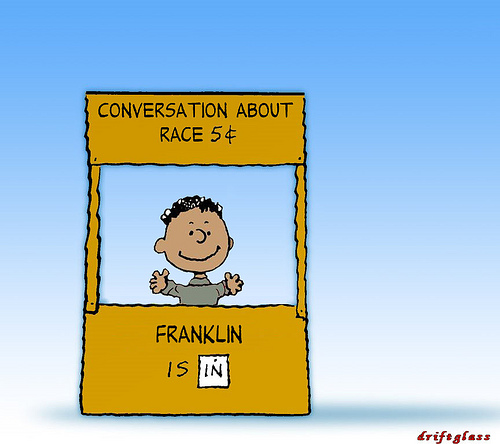
Embracing Conversations about Race in Schools.
By
Anthony Hubbard
Discourse about race
dominates American life
'Race'
is the ugly word that dominates American life in a near complete negative
manner despite the fact that large portions of the country voted twice to elect
an African American president. The term race forces us to confront horrid
factors such as institutionalized discrimination, widespread poverty and
paranoia, distrust and despair, criminal justice failings, police brutality,
and widespread racial discrimination.
In
the current scenario, conversations about race extend well beyond the plight of
millions of blacks. It covers Latinos, Asians, Muslims, and several persecuted
minorities. Open up a prominent national newspaper or switch on cable news, and
you'll find several horrific news stories that ensure that racism remains an
omnipresent conversational topic and with good reason. At most schools and
colleges, we fail to sensitize America's children about race issues at an age
when their minds are very vulnerable to internalizing subtle forms of racism.
Successful classroom engagement is essential to reducing problems related to
race in our society.
Educators must engage in
race-related topics objectively
In
urban settings, at times, it can feel like America exists as a post-racial
society, and this is often the first myth that educators should dispense off
with an evidence-based approach. Before engaging the classroom on the topic of
race, teachers must gather all the facts that support their argument and
methodically incorporate it into their classroom environment. Interracial
conversations about race are bound to be dangerous and can go off track very
quickly, hence, it is essential to be prepared with as much care as possible.
Engaging
in conversations about race in your classroom could impact generations of
individuals, as education is the only way we can end the racial differences at
the core of our society. Colleagues may not be enamored about an educator's
desire to talk about race, and confronting your colleagues about its importance
requires a significant degree of courage and education.
Your courage could shape
the way students think about race forever
Educators
must understand that opening up a dialogue about race is far better than
leaving it unsaid or unspoken. Having a direct, objective, and courageous
conversation about race could positively impact the life of all your students.
At the least, bringing up the topic in the classroom will provide it with
legitimacy, and convey the importance of discussing it with students of all
races.
It
is important to repeat your points in a clear, lucid manner that definitively
reiterates the core of your message. Repetition is one of the most important
tools in the hands of educators, and it is vital to ensure that students hear
what you are saying instead of what they think you may be saying. Clarity and
engagement are the best things educators can provide to their students in such
discussions. Reinforce factual information without resorting to gross
generalizations and statement of biases. Provide students with the platform to
air their views and encourage arguments that steer clear of emotional agitation
and name-calling. Allow all students, not just minority students, to state what
they feel so that you can understand how incorrect opinions can be altered for
good.
Expect discomforting
discussions and arguments
One
factor educators cannot control is a student's previous engagement with racism,
picked up from the world around them. Naturally, discussion of such a
controversial topic is bound to lead to awkward and discomforting situations.
As individuals, we are constantly socialized into differing views on race based
on our external environment. This can
lead to excessive degrees of cognitive dissonance when one person's opinions do
not align with the opinions of the surrounding others. As an educator, you must
allow students to argue with you and each other without 'otherizing' the
opposite views or views you may completely disagree with.
Educators
may need to set basic standards for decorum before proceeding with a discussion
about race. Elucidate to the students the importance of rational conversations
based on facts and logic instead of emotional conversations based on inherent
stereotypes and biases. Educators must strive to normalize the presence of
differing perspectives before clearly imparting the fundamental mistakes behind
certain views. When you are trying to explain to a student why, for example,
constantly passing jokes about all blacks being thieves, is incorrect, you
should not belittle a student, but expose the dangerous statements and very
real statistics behind such statements. Make the intellectual appeal and not
the emotional appeal.
Speak the truth and
encourage students to do the same
Beyond
all else, the truth requires absolute courage. Share your experiences with
racism and its impact on individuals in your life. Share your truthful opinions
even if it may be unpopular with colleagues and students. When educators share
their honest opinions, their colleagues and students may be able to point out
inherent misconceptions and mistakes.
Conversations
about race can be a two-way learning experience and you may become aware of
your incorrect beliefs and misconceptions, which may have seemed based on
facts. The truth is capable of setting both you and your students free.
Addressing honest misconceptions and incorrect opinions are much easier once
heartfelt sentiments have been shared.
Accept a lack of closure
Conversations
about race will typically provide no conclusion, and at the very least,
competent educators can encourage students to think differently about long-held
beliefs. As an educator, your primary job is to ensure that students are aware
of the severity of the problem at hand and encourage them to empathize with the
problems of millions of people around the country.
At
the end, students should be able to realize that, classroom discussions cannot
provide closure for burning issues that are not closed in the real world. At
the very least, students must be sensitized to the plight of racial minorities,
and as a result of your discussion, they could be encouraged to seek tangible
solutions to the multi-faced problems at hand.
Subscribe to:
Posts (Atom)
Featured Post
The Need of the Hour - To Educate Boys and Young Men of Color
A nation is formed by the contribution of every single one of its citizens. It grows, flourishes, progresses alongside its people. ...
-
By Anthony Hubbard Discourse about race dominates American life 'Race' is the ugly word that dominates American...
-
If you’ve been paying attention to what’s happening in our educational institutions, you’d probably have noticed t...
-
On February 14, 2018, Marjory Stoneman Douglas High School, located in Parkland, Florida, experienced one of the deadliest days of school...