Showing posts with label #mybrotherskeeper. Show all posts

Thursday, March 16, 2017

Embracing Conversations about Race in Schools.


By Anthony Hubbard


Discourse about race dominates American life
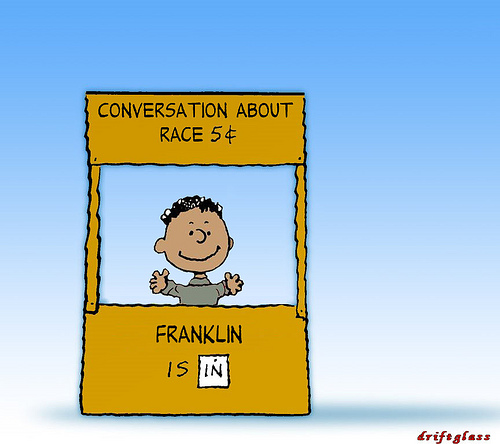
'Race' is the ugly word that dominates American life in a near complete negative manner despite the fact that large portions of the country voted twice to elect an African American president. The term race forces us to confront horrid factors such as institutionalized discrimination, widespread poverty and paranoia, distrust and despair, criminal justice failings, police brutality, and widespread racial discrimination.

In the current scenario, conversations about race extend well beyond the plight of millions of blacks. It covers Latinos, Asians, Muslims, and several persecuted minorities. Open up a prominent national newspaper or switch on cable news, and you'll find several horrific news stories that ensure that racism remains an omnipresent conversational topic and with good reason. At most schools and colleges, we fail to sensitize America's children about race issues at an age when their minds are very vulnerable to internalizing subtle forms of racism. Successful classroom engagement is essential to reducing problems related to race in our society.

Educators must engage in race-related topics objectively

In urban settings, at times, it can feel like America exists as a post-racial society, and this is often the first myth that educators should dispense off with an evidence-based approach. Before engaging the classroom on the topic of race, teachers must gather all the facts that support their argument and methodically incorporate it into their classroom environment. Interracial conversations about race are bound to be dangerous and can go off track very quickly, hence, it is essential to be prepared with as much care as possible.

Engaging in conversations about race in your classroom could impact generations of individuals, as education is the only way we can end the racial differences at the core of our society. Colleagues may not be enamored about an educator's desire to talk about race, and confronting your colleagues about its importance requires a significant degree of courage and education.

Your courage could shape the way students think about race forever

Educators must understand that opening up a dialogue about race is far better than leaving it unsaid or unspoken. Having a direct, objective, and courageous conversation about race could positively impact the life of all your students. At the least, bringing up the topic in the classroom will provide it with legitimacy, and convey the importance of discussing it with students of all races.

It is important to repeat your points in a clear, lucid manner that definitively reiterates the core of your message. Repetition is one of the most important tools in the hands of educators, and it is vital to ensure that students hear what you are saying instead of what they think you may be saying. Clarity and engagement are the best things educators can provide to their students in such discussions. Reinforce factual information without resorting to gross generalizations and statement of biases. Provide students with the platform to air their views and encourage arguments that steer clear of emotional agitation and name-calling. Allow all students, not just minority students, to state what they feel so that you can understand how incorrect opinions can be altered for good.

Expect discomforting discussions and arguments

One factor educators cannot control is a student's previous engagement with racism, picked up from the world around them. Naturally, discussion of such a controversial topic is bound to lead to awkward and discomforting situations. As individuals, we are constantly socialized into differing views on race based on our external environment.  This can lead to excessive degrees of cognitive dissonance when one person's opinions do not align with the opinions of the surrounding others. As an educator, you must allow students to argue with you and each other without 'otherizing' the opposite views or views you may completely disagree with.

Educators may need to set basic standards for decorum before proceeding with a discussion about race. Elucidate to the students the importance of rational conversations based on facts and logic instead of emotional conversations based on inherent stereotypes and biases. Educators must strive to normalize the presence of differing perspectives before clearly imparting the fundamental mistakes behind certain views. When you are trying to explain to a student why, for example, constantly passing jokes about all blacks being thieves, is incorrect, you should not belittle a student, but expose the dangerous statements and very real statistics behind such statements. Make the intellectual appeal and not the emotional appeal.

Speak the truth and encourage students to do the same

Beyond all else, the truth requires absolute courage. Share your experiences with racism and its impact on individuals in your life. Share your truthful opinions even if it may be unpopular with colleagues and students. When educators share their honest opinions, their colleagues and students may be able to point out inherent misconceptions and mistakes.

Conversations about race can be a two-way learning experience and you may become aware of your incorrect beliefs and misconceptions, which may have seemed based on facts. The truth is capable of setting both you and your students free. Addressing honest misconceptions and incorrect opinions are much easier once heartfelt sentiments have been shared.

Accept a lack of closure

Conversations about race will typically provide no conclusion, and at the very least, competent educators can encourage students to think differently about long-held beliefs. As an educator, your primary job is to ensure that students are aware of the severity of the problem at hand and encourage them to empathize with the problems of millions of people around the country.

At the end, students should be able to realize that, classroom discussions cannot provide closure for burning issues that are not closed in the real world. At the very least, students must be sensitized to the plight of racial minorities, and as a result of your discussion, they could be encouraged to seek tangible solutions to the multi-faced problems at hand.

Friday, June 24, 2016

Why is it a Big Mistake to Label Kids?


By Anthony L. Hubbard
We have all been through high school. As a junior, we are sure you remember the fellow student in your class who was always glancing up at the clock. You might have caught yourself wondering – “Is he anxious to get to work?” “Does he want to go smoke a cigarette?” “Is he waiting to leave the classroom?” Would your perception change if you knew that the student was being assigned to an alternative school where students who were “at-risk” of not graduating were being sent? Would it change if you found out that he just got accepted into a prestigious college?

Look closely at the above example. Firstly, you are making an attribution about the student’s cause of behavior. Secondly, you are implicitly considering the characteristics of the person exhibiting the behavior. Thirdly, the descriptions that are provided about the student sets in motion a host of beliefs and stereotypes about the causes of the said behavior. This should give you a fair idea of the kind of negative impact that can be caused by labeling students as “at-risk”. 

Effects of an academic label on attributions

Attributions are made because they are convenient cues and the human brain is primed to follow the path of least cognitive stress. However, the subtle cascading effect of negative labeling is something that we should better acquaint ourselves with. Let us take an example. How many times have you found yourself in a situation where someone put you down unfairly and it just threw you off your rhythm for the rest of the day? We’d venture to guess that it has happened at least once in the last two months. Now imagine if that were to happen on a daily basis. Just think about what that would do to your morale? 

Behavioral psychologists have a term called the Pygmalion effect, which refers to a phenomenon where higher expectations lead to an increase in performance. The more we expect from our kids, the more motivated they are to live up to the expectation. SO, it is always for the better to call them out on their strengths instead of admonishing them for their weaknesses. Worse still, if we categorize children by their family’s income bracket, ethnicity or special education needs, then we are making the assumption that the child has a deficit. How would you feel if you were called an ‘at-risk’ educator because you failed to reach out to a kid?

Labeling faux pas educators should strive to avoid
  • Never discuss children in front of other children or parents. They listen to and understand a lot more than we realize.
  • Comment on their behavior, not on their character. For instance, it is always better to say “Lisa, you have put a lot of hard work into your art project” instead of saying “Lisa, you are a great artist”. 
  • Never use labeling as a motivational or a behavioral tool. You cannot motivate an overweight kid to exercise by calling him fat. Similarly, you cannot get them to perform better by calling them stupid. 
  • Encourage kids to explore all kinds of activities. They should never be limited in their opportunities just because it does not fit our ideas of what their weaknesses or strengths are. 
What are educators missing out on?
If we want our mental health and education systems, which should be operating in collaboration, to better serve our diverse and multicultural youth population, we must make sure that they are adapted to be culturally responsive, strength-based and youth-centered. 

A lot of the time, educators fail to take into account that most kids from underprivileged urban areas beat some really great odds to show up to school. From lack of parental support to growing up in tough neighborhoods without enough money, they go through a lot every single day of their lives. They must be encouraged for braving their daily ordeals instead of being put down for not living up to the standardized set of rules and behavior. Labeling them as delinquents, at-risk or hopeless is not doing anybody any good. It does not give us or the student a better understanding of the situation.

You need to put yourself in the shoes of those kids. For them, the microaggressions they face in the classroom is not very different from what they have to face in their daily interactions. It creates a hostile and invalidating climate in the school campus, perpetuates the stereotype threat, assails their mental health and affects the problem solving abilities and the academic productivity of the kids. 

How can we reduce instances of microaggressions in the classroom?
Racial ignoring and racial spotlighting are two of the most common instances of racial microaggressions. Racial ignoring is when students of color do not receive any recognition or acknowledgment by the white students or teachers. Racial spotlighting is when these same students frequently find themselves being the object of uninvited attention, like when they are asked to give their opinion on racial matters just because they are a part of that racial group. It happens more often than most teachers would like to let on. 

To make a difference, educators need to be more self-aware of their own conduct in the class. As long as the microaggressions remain invisible, hidden, unspoken and excused as an innocent slight, people will continue to demean, insult, alienate and oppress the marginalized groups. It is up on the educators to make sure that they take every step to recognize and address instances of microaggressions when they see them. 

Friday, February 26, 2016

The Need of the Hour - To Educate Boys and Young Men of Color


A nation is formed by the contribution of every single one of its citizens. It grows, flourishes, progresses alongside its people. In the same measure, it fails to achieve its optimal development when a section of the citizenry is denied the ability to give their best to their homeland. In the U.S., where the fabric of society comprises of many hues and textures, it is indeed surprising, even shocking, that young men of color are yet to receive their due, their fair share of the resources that the country has to give. This is most evident in the skewed educational landscape we witness. The facts about young men of color that are commonly known are:
  • Young men of color enrolled in America’s urban schools do not demonstrate the academic excellence that paves way for successful higher education or lucrative career
  • A disproportionate number of young men of color have low attendance at school and high dropout rates when compared with their counterparts

The Big Picture that is often Hidden
However, the big picture that emerges when you start exploring why this situation exists is not quite as well known or well publicized:
  • Due to a variety of historic, cultural, social reasons, the families of these young men have been kept out of the more upscale, prosperous neighborhood, thus limiting their ability to enroll at the best urban schools in the country.
  • Studies reveal that young men of color are far more likely than their peers to attend schools where the quality of teaching is below par, with fewer experienced teachers available and accessible.
  • These young men are also far more likely to attend schools where educational resources are heavily limited and restricted, thus restricting their ability to take initiative for their own education in the absence of high quality teaching. These resources include science labs, libraries, athletic programs and so on.
  • The schools they attend may also typically have a dearth of qualified, experienced counselors meaning that these young men of color have no one to turn to for guidance and support in making the right career choices. This is especially a huge challenge for first generation school students who come from a family where no one else has had an opportunity to study.
  • A host of factors, including these prevent these young men of color from graduating from school with the necessary preparation to take up higher education at a quality institution. This means that the cycle is repeated, restricting the student’s ability to hone his inherent skills into professional qualifications that will get him a job where his full potential is utilized.

Young men of color are denied the chance to give their best to America
The situation is a very unfortunate one because it is not only these young men of color who are at the losing end. It is, in fact, the country that is losing out and quite significantly. Unfortunately, this is one aspect that does not receive the attention it deserves. The reality is that no country can progress as well as it should unless every section of the population is given the opportunity to explore their own talents and skills to the maximum. No country can flourish unless every such section has access to resources that let them discover their inherent skills and develop them. And no country can optimally develop and succeed unless every such section is integrated into its workforce in areas where their skills can be leveraged to the maximum. 
In an ideal society, every single student is given equal educational opportunities, has access to teachers and learning resources to identify the ways in which they can excel in life. This is a first step that lets students achieve personal success and position themselves as an integral part of society. It also puts a full stop to the vicious cycle of poorly educated adults failing to recognize the need to get their children educated, thus fostering yet another generation of young men of color unable to contribute to society and nation.
Education is Key to Safeguarding the Nation’s Resources
Young men of color face several prejudices, most common among them being that they are aggressive and more likely to engage in criminal activities. The statistics that show the immense number of young men of color engaged in unlawful activities only add fuel to this fire. However, explore the facts with a closer look at the causative factors and a very different picture emerges. If we are able to equip these young men with the education they need to succeed in a constructive career, we can effectively channelize their energies in the right way. These students can become the men who stand first in our line of defense, who build the businesses that will take America to new heights, who come up with innovative ideas that will position the country as a world leader. 
If we ignore that the country is failing these young men who have untapped potential, we also close our eyes to the fact that we are committing to reserve many, many resources to an unproductive cause. This is because the lack of education will force many of these current generation youngsters into the wrong path, prompting them to engage in anti-social activities. In later life, many of these young men may ‘graduate’ into more serious crimes, requiring the investment of state and national resources into identifying them, controlling them and incarcerating them to keep them isolated from society. 
The Great City Schools of America have already recognized that the roots of the problem lie in the formative years of young men of color. The 60 urban school systems have pledged to invest efforts into eliminating the inequities that hamper the growth of these students. It is up to every one of us to accept our share of the responsibility in ensuring that young men of color are given the impetus, the tools to become society’s most respected, most valuable assets instead of forcing on them a life that can only take them and the country, with them,

Tuesday, October 6, 2015

Making a Difference to Underachievers

Making a Difference to Underachievers Using the Feuerstein Method
 

In today’s educational landscape, it is quite common to see students categorized as ‘intelligent’, ‘average’, ‘unintelligent’, ‘underperformers’ and so on. The view that students have a pre-determined, pre-set ‘level’ of intelligence and ability to learn is quite prevalent and this is a widely accepted view as well. Academicians and educators across the country, even the world, really believe that not all students can achieve the same academic goals because of the differential intelligence levels that they are endowed with. This gives credence to the belief that intellect or intelligence is an inborn ‘skill’, with each person being gifted with a specific limit of it. This also means that there are only a select few who can truly excel even when the best teachers are employed and they are leveraging the most modern, most effective teaching techniques to impart knowledge.

This view is flawed in more than one way because there is reason to believe that the so called ‘underperforming’ student does not have the same intelligence or ability to grasp complex academic concepts as the so- called ‘intelligent’ student. Further, there is no scientific basis for the assumption that everyone is born with different intelligence levels, which cannot be enhanced or drawn out in any way as they progress through life and through different educational experiences. As Nobel Prize nominee, clinical, developmental and cognitive psychologist Ruevin Feurestein explained, ‘intelligence is not fixed but modifiable’. It is the responsibility of the teacher or academician to devise a teaching system or strategy that helps every student achieve higher levels of intelligence by drawing upon his or her own hidden reserves.

An overview of the Feuerstein Method

After fleeing the Nazi invasion, Feurestein leveraged his psychology degree to teach young survivors of the Holocaust in his new home in Palestine. The needs of these children prompted him to take up a career that would address both psychological and educational needs of refugee children. In the 1950s, Feurestein was involved in working with children from Moroccan, Berber and Jewish families and he found that those who initially scored low on IQ tests showed remarkable improvement when they were given special psychological and academic attention.

This encouraged him to start viewing intelligence as a modifiable characteristics rather than a fixed one, as the traditional view point held. He started researching various ways in which too ‘teach’ intelligence even as he expounded the theory that the students who excelled and who were believed to be intelligent were actually leveraging their ability to learn more effectively than others.

The prevailing means and tools for measuring intelligence were flawed and inadequate, in his view, because they failed to indicate that all students could be elevated to the same level of intelligence provided they were taught how to do it. As a new, more effective and more accurate method of evaluation, Feurestein came up with the dynamic assessment method, as it is known today. His focus was on identifying and evaluating the inherent cognitive flexibility in the child that represents the ability to learn. Once this evaluation is done, teaching methodologies can be tweaked so that these abilities are used optimally.   This view was dramatically different from what was commonly accepted then and it transformed the way people looked at ‘intelligence’ and its impact on academic performance.

Taking his study further, Feurestein began to devise methodologies to help children who were not performing well academically and work on their weaknesses, putting them on track for dramatic improvements. ‘Mediated relationship’, he discovered, lay at the foundation of meaningful teaching strategies. These methodologies have brought a ray of hope into the lives of not just poorly performing children but also children with special needs such as those affected by Down’s Syndrome, palsy, stroke or other conditions. 

The journey from ‘poor performer’ to ‘gifted’ status 

Feuerstien’s methods can be used with amazing success in every academic field to teach and engage urban students most effectively. The success of the methods hinge on our ability to understand and accept that intelligence is limitless. Most urban schools tend to look at students as deficits; they believe that the students can only advance so far. However, this is far from the truth that Feuerstien has proven beyond doubt. In my personal experience, wherever I have implemented Feuerstien’s method, the results have been simply dramatic and uniformly impressive.   I have taught several boys and young men of color with these tools and witnessed the improved academic performance from close quarters.

One important contributing factor for this impressive change is that a growth oriented mindset is essential. A tremendous amount of growth is possible when this correct approach is adopted to take a low performing student and turn them into a “gifted” student. This growth mind set is often lacking in academic environments where ‘underachievement’ is the expected outcome. Sadly, this is true of many schools where children of color are automatically tagged with the ‘underperformer’ label. The teachers may, inadvertently, believe that these students are incapable of improving their academic excellence and thus feel that investing more attention or time on them will not yield results. In reality, it is the opposite that is true.

The teacher has to actively believe that the students can excel and this belief should be evident every single day in the teaching strategy, technique and tools utilized.  This positive mindset, that the underperforming student is no different from their academically proficient peers, is the foundation block on which the students builds their new skills to learn more effectively and efficiently.

Another critical understanding for both teacher and student is that learning and intelligence are not two different aspects. Intelligence is the knowledge of identifying where knowledge can and should be applied, i.e.: a meta knowledge of sorts. This knowledge comes when the learner is actively involved in the learning process- understanding why they are studying something and where they might apply it. When the students make these connections, they can apply the knowledge intelligently to various situations. This is not all- they can also learn more advanced concepts easily because the grounding of knowing why they need it and how to use it is already present in them. This is how the transformation from poor performers to exceptional students takes place with the right teaching methodologies being implemented.

Tuesday, June 23, 2015

Designing Ideal School Environments for Boys and Young Men


By Anthony L. Hubbard

Studies, surveys and research over the last few decades have proven time and again that single sex schools function better to serve students in a more wholesome way as compared to coeducation schools. It is a proven and widely known scientific fact that boys and girls develop differently at different ages, both physically and psychologically. Single sex schools are better able to modify their assessment and training systems to accommodate these developments, since they have to only optimize it for either boys or girls, instead of for both.

The central idea behind this discussion is that urban boys, especially those of color, should have access to high quality public school education on par with private educational institutions to help them succeed academically and professionally. African American children should have high quality single sex education centers, which concentrate on developing them as unique individuals and provide them good role models from within their own community who they can readily identify with.

Designing and creating a good single sex school for young African American men

What are the parameters and factors that need to be considered, analyzed and customized to create single sex schools that can provide unique learning ecosystems to young urban African American boys and men? We discuss a few vital parameters here that need to be considered when designing a single sex school for boys, and how to go about doing it right.

Developing a vision and mission – It is the first and most important step in designing a good single sex school for boys. Knowing the reason behind starting a school and the results you wish to achieve, forms the foundation for designing a good school.

Your vision should enumerate why you wish to start a single sex school for African American boys in the city. It should clearly state what your idea is, why you wish to pursue the idea and what you plan to achieve by pursuing and implementing your idea.

Your mission should talk about how you plan to achieve the results and impact you have detailed in your vision. It should also talk about the values you wish to incorporate at the core of all your work.

The mission should take into consideration the following differences in genders and optimize educational plans for boys:
  • Boys take more time learning vocabulary, writing and language skills.
  • Boys are better in computation and motor skills related activities.
  • Boys tend to move around a lot, prefer playing outdoors and using touch and physical handling to discover new objects.
  • Boys also tend to be more aggressive, which means you will have to plan for avoiding or discouraging fights at school.
Teaching/learning/academic support and assessment systems – This refers to the various systems in place to ensure the school moves successfully towards fulfilling its vision and mission. The school education system should be designed such that it helps both students and teachers to develop their skills and grow over time, making the education system beneficial for all those involved.

It should have programs for teachers, educators and other academic staff at schools to help them understand the changing social, economic and legal structures related to education. This could include regular training and workshops, along with tickets for local, national and international educational conferences.

Sports should be given a lot of importance in the curriculum and boys should be encouraged to engage in healthy competition. Physical education and exercise should be made an intrinsic part of the entire education setup. Such physical activities help boys deal with all the youthful energy in a positive way so that they can concentrate better during classes.

It should have special programs and assessment systems in place to ensure students learn to the best of their ability and teachers are able to provide high quality education. Assessment systems should help better learning among students, should be fair to all and should be constantly reviewed and updated as students’ requirements change.

School climate and culture – The school environment should be inspiring, comfortable and ensure safety for all students. No matter how young or old, big or small, strong or weak a student, he should not feel endangered at school. He should be able to feel safe and secure within the premises and gain confidence to feel that way in the outside world as well. The school should feel comforting and nurturing to every student who comes to study.

Creating such an atmosphere at our school requires careful thought and consideration during the initial stages of designing a school, with detailed reviewing of plans on a regular basis to ensure it serves the purpose of good education well. You need to talk to students about concerns they might have about going to school, instances of bullying and feeling left out due to interests that are different from most other students, so that you can think of all that needs to be included in your design to make your school student-friendly.

A conducive environment for a boys' school should also incorporate a lot of physical activity. The seating arrangement should be such that they can keep moving around, as that would help them concentrate better.

Culture at the school should be one that is inclusive and unbiased. Cultural differences and uniqueness should be celebrated, encouraged and upheld as an asset to the school than as a liability. Diversity helps students get acquainted and be comfortable with differences among people, helping them adapt to the outside world much better and more easily.

School counseling and guidance – Most young boys go through developmental phases, where they are unsure of who they are, what they want to do with their lives or what choices they need to make in life. It is essential to be able to address these concerns at school, so that every student can perform well academically without being bogged down by problems and lack of guidance.

There needs to be a dedicated space with experts, where students can go to talk about their problems, ask questions and get help regarding personal, academic and professional queries. This space needs to inspire students to feel comfortable and open up about things that are bothering them, to actively seek out guidance and counseling without fear of rejection, ridicule or judgment.

Overall, single sex schools for boys need to take into consideration the following factors during planning and implementation of the school design and curriculum:

  • Vision and mission that takes into account gender differences, so that the school is optimized for boys to study well, learn better and excel in life.
  • Teachers should be made aware of gender differences and trained to teach boys in a way that they understand and learn.
  • The school climate should be conducive for boys to move around, be physically active. It should be a place where they feel physically and emotional safe and secure.
  • Counselors and guides who understand boys well should be appointed to talk to boys who may be facing problems at home, school or with other facets of life. They should feel understood and have someone to guide them the right way.
Well-designed single sex schools for urban African American boys and men can go a long way in putting them on an equal platform with their urban peers and help them succeed professionally. It can assist them with making informed decisions about their career and life, enabling them to pursue their goals with absolute passion and dedication.


Wednesday, April 22, 2015

Why is Single-Sex Education Important?


Boys and girls are different – there is no denying that. They have different needs and react differently in different situations. Considering this, putting them together in coeducation classes does not seem to be a really bright idea. It doesn't allow educators to care for all their needs equally. This may result in either gender feeling neglected. In order to prevent this, single-sex education systems have to be implemented. Here's how they can help:
  • Overcomes stereotypes: Talent comes in many forms. Some students are good in academics, some can paint well and some are great actors. Some excel in soccer and others in athletics. And there may be those who write very well – either stories or poems. One of the biggest problems for students in coeducational classrooms is the reinforcement of stereotypes - “Poetry is not for boys” or “Soccer is not for girls”.
These stereotypes in combination with peer pressure may result in smothering of budding talent in both boys and girls. Or, this may result in students not overtly showcasing their talents which can lead teachers to feel that those students have no talents at all. Either way, students are unable to get the attention that they deserve. On the other hand, in the single-sex education system, where a class full of boys learns to love poetry or a class full of girls plays football, the stereotypes won't even raise their heads. Single-sex systems allow students to explore all their interests without having to worry about what the other gender thinks of their choices.

  •   Makes handling puberty easier: Another advantage of single-sex classrooms is that there will be no unnecessary showing-off for the opposite sex. This is particularly beneficial when the students start hitting puberty. They can concentrate more on their studies than on the hot girl in the first row or the cute boy standing in the corridor. 
  • Caters to each sex individually: Boys are generally more boisterous and have higher energy levels than girls. They need to be engaged all the time. Not giving them enough attention can cause them to misbehave. On the other hand, a teacher cannot dedicate all of his/her attention to boys only. This will result in neglecting the girls. And, girls are less likely to speak out in coeducational classes. Single-sex educational systems are the best solutions.
  • Better academic performance: In 2007, neuroscientists from NIMH (National Institute of Mental Health) released the report of a study which clearly shows that there are physiological differences in the brains of boys and girls. They develop differently in different ages and it is important to use appropriate training methods. Approaching teaching in the same way is a mistake. Single-sex systems will allow for utilizing the correct approach that can help improve the academic performance of students.
In addition to these, single-sex systems will also provide a proper environment for students to handle their social and emotional development needs. Students can ask any question in class without hesitation or fear of embarrassment. Boys are also more likely to socialize and collaborate in a single-sex environment than in a co-ed one. And, they can show emotions openly. 

Of course, for some students, the setting may not matter at all; but, not for all. Single-sex systems have a clear advantage over co-ed ones and implementing them can provide students an environment where they will flourish.

Thursday, April 16, 2015

How Single-Gender Education Can Help African-American Boys


The rate of dropouts of African-American boys from schools is much higher than that of whites and has always been so. The former are also less likely to graduate than the latter. Clearly, there is a problem that needs to be solved. Single-sex schools have been around for a while. All-girls schools are built on the premise that they help provide equal access and opportunities for girls. But, why should boys also need such systems? Here, you will learn the advantages that such schools give boys, particularly African-Americans.

  •  Tailored curriculum:  Many educators are of the opinion that the social and educational problems faced by African-American boys can be at least addressed, if not completely solved, through single-sex schools. In such schools, the curriculum can be uniquely tailored to handle the needs of its students. There can be classes on leadership, for example. These schools can also provide opportunities to the boys, who may have otherwise been overlooked in other schools.

  •   Provide positive examples: Often, these boys lack a positive male role model or a male role model at all. Single-sex schools can cater to these boys by giving them examples of positive and negative role models. The schools can also instill the importance of education beyond their schooling. This is important because, for many of these boys, their idea of personal identity does not include education. In addition, schools can provide additional rigorous training that will help students to successfully tackle standardized tests and get enrolled in colleges.

  • Break stereotypes: The idea of “masculinity” may prevent the boys, in regular schools, from undertaking activities that can be perceived as feminine. In single-sex schools, the teachers can help them to overcome stereotypes more easily given that they boys will not have to confront girls all the time.

  • Increase college enrollment rates: This study, conducted by scholars of the University of Pennsylvania, has found that a larger proportion of students from single-sex schools attend four-year colleges compared to students of coeducational schools. This is true for both private and public schools and irrespective of student-teacher ratios, teacher quality, and other factors.

  • Instill confidence: By letting the boys know that they are expected to perform, teachers can instill self-confidence in them. The students will know that they are capable of achieving target and that there are those who believe in them.

While all of these can also be achieved through co-ed schools, it will put an additional burden on them. Not all schools will be able to bear that burden and catering specifically to African-American boys may create problems for the schools.

However, single-sex schools for African-American boys can tailor their curriculum and practices to cater to specific needs and requirements. Such schools will provide a stable and safe environment for the students to experiment and learn more about what it means to be a part of the society.

Students can also better understand what it means to be a man and that it involves more than just sexual prowess. They will understand the importance of education and learn what it takes to be a leader. Stereotypes associated with African-American males can also be overcome. Overall, single-sex schools for African-American boys will help them to lead better lives.

Friday, August 1, 2014

The Value in Single Sex Schooling

A case for more than just "learning: for boys of color, Anthony L. Hubbard

Facing the truth
 
Schools across America report unacceptably high levels of dropout rates (exceeding 45%) for young males of color, including Latinos and African-Americans. And as a result, young boys representing this segment of America's future have a lesser probability of enrolling or graduating from college than many individuals from other peer groups.  

And while young male students across all demographics might exhibit resistance to learning, or face challenges in a learning environment, it is males of color who are most likely to be determined as having a "learning disability", or worse still of being branded "developmentally disabled". 

The truth is that young boys of color face an uphill struggle distinguishing themselves within the current education system. They more likely to deliver poor academic performance, and are less likely to secure spots on coveted scholastic talent programs. In a country that has its first President of color, a man who is acclaimed for his educational accomplishments, the status quo of education for young men of color is unacceptable.   

Something needs to change quickly, or America may face yet another crisis of a generation of young men of color that are lost!

Read more:  Complete article here

Featured Post

The Need of the Hour - To Educate Boys and Young Men of Color

A nation is formed by the contribution of every single one of its citizens. It grows, flourishes, progresses alongside its people. ...