Deliver us from Crisis is a series of articles to study and eliminate those issues concerning boys of color transitioning to adulthood. In addition, I post stories of rites of passages, photos, experience and much more to inform and inspire our young men of color.
Showing posts with label #YBPEDU. Show all posts
Monday, August 7, 2017
Educational Impact: Why Student Voices Matter on School Boards
In spring 2016, the U.S. Census Bureau released a stunning figure: topping just over 75 million, the Millennial generation finally surpassed Baby Boomers in population. These young people, ages 18-34, are rapidly becoming America’s largest generation with an economic and political clout to match. But even though younger voters have been an instrumental part of political and cultural shifts in America over the last several years, there is one place young people are still fighting to be heard: school.
More Millennials have bachelor’s degrees than any other generation before them and, yet, whether you fall on the younger or older end of the generational spectrum can determine a lot about your student rights.
Since school boards were first established in Massachusetts in 1862, Americans have cultivated a rich history of democratic representation and local control in education. Whether a parent or a business owner, you have the chance to hold a direct voice in public and private schools of all kinds.
However, if you are a student, this choice often does not exist.
American school boards are filled with representatives from across the political spectrum at the state and local levels, but too often they have failed to include those directly affected by the choices of the board: students.
A few universities, traditional public schools, and charter schools have been testing student representation, but more often than not, students are the very demographic continuously lacking representation by their governing bodies. As a student, you simply don’t have a say in the decisions impacting your future. How fair is that?
Recently, one Rutgers faculty member raised this very concern. While the university’s Board of Governors had representation from interested parties and alumni, often these board members were 10-40 years removed from university life. The members were completely unaware of new problems affecting current students, such as the need for mental health services and basic changes in curriculum.
The same can be said for schools across America; and not just at the college level.
Over a 4-month period in 2016, U.S. Bureau of Labor Statistics (BLS) reported that nearly 21 million youth between 16-24 were employed in the U.S., and these numbers demonstrate the responsibility and influence young people have in their communities. That influence is only growing. So, why can’t these students – who are talented and hardworking enough to hold jobs - also have a voice and a vote when it comes to their education?
This lack of student rights across America raises concerns about the nature of our educational environment itself.
When economic and political interests can carry more weight on school boards than the concerns of students, it is evident that a democratic and student-centered approach to education is lacking. Allowing students to vote in the highest positions of school districts, university leadership, and traditional public or charter school governance demonstrates a strong commitment to student success.
Student representation brings forth fresh perspectives and on-campus knowledge otherwise unknown to school boards, but it also more appropriately reflects the vested interest young people have in their own futures and our American communities overall.
Wednesday, August 2, 2017
Solving The Problem Of Black Male Achievement – Less Talk, More Action
Solving The Problem Of
Black Male Achievement – Less Talk, More Action
Today,
we’ve reached a critical point in the Black Male achievement conversation –
which means it’s time to stop having a conversation and start taking action. So
far, there is no “perfect solution” that can guarantee the success of Black
males in the US – the problems of pernicious institutionalized racism, poverty,
and a system that’s built to victimize Black males are enormous.
But
there is no longer any time to waste. The problems are worse than they’ve ever
been before – as of 2014 only about 54% of
Black students graduate from high school – and Black males in the twelfth grade
have lower average reading test scores than any
other ethnic or racial group.
The
numbers don’t lie – even as colleges and high schools around the US boast about
their exceptional achievements and the bright futures of their students, it is
evident we are leaving our Black males behind.
It’s
time to stop talking about how we can promote Black male achievement – and time
to start taking action. Let’s discuss some novel strategies that could help
promote Black male achievement, and have a serious impact on the issue of the
“Black Male Achievement Gap.”
Force Schools And
Administrators To Recognize The Problem – And Take Action
One
of the biggest issues facing Black male achievement is that many schools –
especially public schools – fail to acknowledge that Black males are uniquely
discriminated against within the system.
Too
often, we hear about Black males who are rejected by administrators. They’re
written off as “bad seeds,” and sent directly to the “school-to-prison”
pipeline. This is not a myth – it’s a fact and needs to be acknowledged as
such.
Black males are 4x more likely
than white students to be suspended, and over 70% of in-school
arrests involve Black or Latino students. Not only that, Black males are 2x as
likely to not complete high school – and 68% of all inmates in our federal
prison system doesn't have a high school diploma.
We
must break down this system of apathy, hate, and institutionalized prejudice.
We must recognize that Black males are now more naturally prone to violence or
misbehavior than any other group of students – they are products of their
circumstances. Poverty, broken families, abuse – these stresses take their
psychological toll on our Black youth.
We
must force administrators and schools to acknowledge the problem of
institutionalized racism – and set aside money for programs and initiatives
that are specifically designed to increase the achievement of Black males.
Black
male mentorship programs, Rite
of Passage programming, and other after-school programs may not be the
newest solution around, but they’re proven to work. Males that have
participated in such programs have also experienced an increase in academic
performance. These programs are tailored
directly to Black youth – and can have a dramatic effect on Black male student
outcomes, and help us narrow the achievement gap.
Bring Black Male
Students Together, And Present A United Front
Our
young Black men in high school often feel targeted, victimized, or alone – and
it’s critical that we take steps to solve this issue.
Black
males must be taught the skills to navigate and advocate for themselves within
the system. They must take a united
stand and say, “no more shall we be pushed to the side and made to feel
invisible.” A radical approach is needed,
meaning getting down and understanding the root cause of the problems facing
our young men. Then force change within
a system that appears partly invested in solving or improving the educational
experience of these youth. Often, lack
of funding, time and capacity are excuses to continue the status quo. But I ask, where are the education dollars
going? -- Not too many schools in our
most economically depressed neighborhoods, not to recruit highly qualified
teachers to teach our nations most disenfranchise youth and surely not to
create pathways of opportunity for Black males who are facing a high
probability of school failure.
We
must create an environment that Black males feel welcomed, care for, loved and
nurtured. We must remove the mindset
that all Black males are destined for failure.
We must empower our males to be an active participant in their education
and make curriculum reflective of their culture and experiences. I know this is difficult to do in most
traditional school settings -- but here’s a thought experiment for you. Why
can’t we have more schools that are specifically targeted to [I almost said “at-risk,” but “at-risk” makes
it seem like it’s the student's fault] Black males or males of color for
that matter?
After-school
programs and community organizations can only do so much for our Black males.
By implementing a specialized schooling system that focuses on educating and
preparing Black males – and not on punishing them – we can arm them with the
tools they need to narrow the achievement gap and succeed in life.
There
are many of those who believe in the myth of “self-segregation” – and may not
approve of this idea. However, the fact of the matter is that the inherent
prejudice of the public and private school systems is the primary cause of much
of the Black male achievement gap.
Yes,
though no education system can be entirely free from failure, a school tailored
specifically to youth of color could implement culturally responsive programs
and classes that would provide a more engaging learning environment – and
provide students with the tools they need to succeed in their life after
school.
There Is No “Perfect
Solution” – But That Doesn’t Mean We Can’t Act Now!
If
we wait around discussing the issue of the Black male achievement gap until we
find a perfect solution, we’re leaving our Black students behind. It’s just
that simple.
So
don’t wait for a perfect solution. If you’re an educator, administrator, or a
member of the community, it’s time for action. Even if you can only help one
Black male at a time, that’s enough.
We
can’t leave our future leaders. If we work together, we can improve conditions
for Black youth – and help narrow the opportunity gap for young Black men. The
journey will be hard, and the obstacles may seem insurmountable – but our men
are worth the investment.
Thursday, March 16, 2017
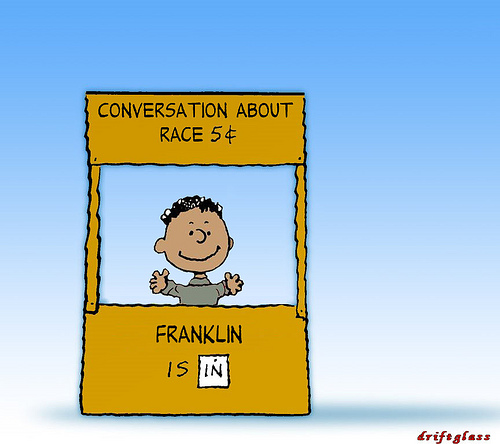
Embracing Conversations about Race in Schools.
By
Anthony Hubbard
Discourse about race
dominates American life
'Race'
is the ugly word that dominates American life in a near complete negative
manner despite the fact that large portions of the country voted twice to elect
an African American president. The term race forces us to confront horrid
factors such as institutionalized discrimination, widespread poverty and
paranoia, distrust and despair, criminal justice failings, police brutality,
and widespread racial discrimination.
In
the current scenario, conversations about race extend well beyond the plight of
millions of blacks. It covers Latinos, Asians, Muslims, and several persecuted
minorities. Open up a prominent national newspaper or switch on cable news, and
you'll find several horrific news stories that ensure that racism remains an
omnipresent conversational topic and with good reason. At most schools and
colleges, we fail to sensitize America's children about race issues at an age
when their minds are very vulnerable to internalizing subtle forms of racism.
Successful classroom engagement is essential to reducing problems related to
race in our society.
Educators must engage in
race-related topics objectively
In
urban settings, at times, it can feel like America exists as a post-racial
society, and this is often the first myth that educators should dispense off
with an evidence-based approach. Before engaging the classroom on the topic of
race, teachers must gather all the facts that support their argument and
methodically incorporate it into their classroom environment. Interracial
conversations about race are bound to be dangerous and can go off track very
quickly, hence, it is essential to be prepared with as much care as possible.
Engaging
in conversations about race in your classroom could impact generations of
individuals, as education is the only way we can end the racial differences at
the core of our society. Colleagues may not be enamored about an educator's
desire to talk about race, and confronting your colleagues about its importance
requires a significant degree of courage and education.
Your courage could shape
the way students think about race forever
Educators
must understand that opening up a dialogue about race is far better than
leaving it unsaid or unspoken. Having a direct, objective, and courageous
conversation about race could positively impact the life of all your students.
At the least, bringing up the topic in the classroom will provide it with
legitimacy, and convey the importance of discussing it with students of all
races.
It
is important to repeat your points in a clear, lucid manner that definitively
reiterates the core of your message. Repetition is one of the most important
tools in the hands of educators, and it is vital to ensure that students hear
what you are saying instead of what they think you may be saying. Clarity and
engagement are the best things educators can provide to their students in such
discussions. Reinforce factual information without resorting to gross
generalizations and statement of biases. Provide students with the platform to
air their views and encourage arguments that steer clear of emotional agitation
and name-calling. Allow all students, not just minority students, to state what
they feel so that you can understand how incorrect opinions can be altered for
good.
Expect discomforting
discussions and arguments
One
factor educators cannot control is a student's previous engagement with racism,
picked up from the world around them. Naturally, discussion of such a
controversial topic is bound to lead to awkward and discomforting situations.
As individuals, we are constantly socialized into differing views on race based
on our external environment. This can
lead to excessive degrees of cognitive dissonance when one person's opinions do
not align with the opinions of the surrounding others. As an educator, you must
allow students to argue with you and each other without 'otherizing' the
opposite views or views you may completely disagree with.
Educators
may need to set basic standards for decorum before proceeding with a discussion
about race. Elucidate to the students the importance of rational conversations
based on facts and logic instead of emotional conversations based on inherent
stereotypes and biases. Educators must strive to normalize the presence of
differing perspectives before clearly imparting the fundamental mistakes behind
certain views. When you are trying to explain to a student why, for example,
constantly passing jokes about all blacks being thieves, is incorrect, you
should not belittle a student, but expose the dangerous statements and very
real statistics behind such statements. Make the intellectual appeal and not
the emotional appeal.
Speak the truth and
encourage students to do the same
Beyond
all else, the truth requires absolute courage. Share your experiences with
racism and its impact on individuals in your life. Share your truthful opinions
even if it may be unpopular with colleagues and students. When educators share
their honest opinions, their colleagues and students may be able to point out
inherent misconceptions and mistakes.
Conversations
about race can be a two-way learning experience and you may become aware of
your incorrect beliefs and misconceptions, which may have seemed based on
facts. The truth is capable of setting both you and your students free.
Addressing honest misconceptions and incorrect opinions are much easier once
heartfelt sentiments have been shared.
Accept a lack of closure
Conversations
about race will typically provide no conclusion, and at the very least,
competent educators can encourage students to think differently about long-held
beliefs. As an educator, your primary job is to ensure that students are aware
of the severity of the problem at hand and encourage them to empathize with the
problems of millions of people around the country.
At
the end, students should be able to realize that, classroom discussions cannot
provide closure for burning issues that are not closed in the real world. At
the very least, students must be sensitized to the plight of racial minorities,
and as a result of your discussion, they could be encouraged to seek tangible
solutions to the multi-faced problems at hand.
Friday, June 24, 2016
Why is it a Big Mistake to Label Kids?
By Anthony L. Hubbard
We have all
been through high school. As a junior, we are sure you remember the fellow
student in your class who was always glancing up at the clock. You might have
caught yourself wondering – “Is he anxious to get to work?” “Does he want to go
smoke a cigarette?” “Is he waiting to leave the classroom?” Would your
perception change if you knew that the student was being assigned to an
alternative school where students who were “at-risk” of not graduating were
being sent? Would it change if you found out that he just got accepted into a
prestigious college?
Look closely
at the above example. Firstly, you are making an attribution about the
student’s cause of behavior. Secondly, you are implicitly considering the characteristics
of the person exhibiting the behavior. Thirdly, the descriptions that are
provided about the student sets in motion a host of beliefs and stereotypes
about the causes of the said behavior. This should give you a fair idea of the
kind of negative impact that can be caused by labeling students as “at-risk”.
Effects of an academic label on
attributions
Attributions
are made because they are convenient cues and the human brain is primed to
follow the path of least cognitive stress. However, the subtle cascading effect
of negative labeling is something that we should better acquaint ourselves
with. Let us take an example. How many times have you found yourself in a
situation where someone put you down unfairly and it just threw you off your
rhythm for the rest of the day? We’d venture to guess that it has happened at
least once in the last two months. Now imagine if that were to happen on a
daily basis. Just think about what that would do to your morale?
Behavioral
psychologists have a term called the Pygmalion effect, which refers to a
phenomenon where higher expectations lead to an increase in performance. The
more we expect from our kids, the more motivated they are to live up to the
expectation. SO, it is always for the better to call them out on their
strengths instead of admonishing them for their weaknesses. Worse still, if we
categorize children by their family’s income bracket, ethnicity or special
education needs, then we are making the assumption that the child has a
deficit. How would you feel if you were called an ‘at-risk’ educator because
you failed to reach out to a kid?
Labeling faux pas educators should
strive to avoid
- Never discuss children in front of other children or parents. They listen to and understand a lot more than we realize.
- Comment on their behavior, not on their character. For instance, it is always better to say “Lisa, you have put a lot of hard work into your art project” instead of saying “Lisa, you are a great artist”.
- Never use labeling as a motivational or a behavioral tool. You cannot motivate an overweight kid to exercise by calling him fat. Similarly, you cannot get them to perform better by calling them stupid.
- Encourage kids to explore all kinds of activities. They should never be limited in their opportunities just because it does not fit our ideas of what their weaknesses or strengths are.
What are educators missing out on?
If we want
our mental health and education systems, which should be operating in
collaboration, to better serve our diverse and multicultural youth population,
we must make sure that they are adapted to be culturally responsive,
strength-based and youth-centered.
A lot of the time, educators fail to take into account that most kids from underprivileged urban areas beat some really great odds to show up to school. From lack of parental support to growing up in tough neighborhoods without enough money, they go through a lot every single day of their lives. They must be encouraged for braving their daily ordeals instead of being put down for not living up to the standardized set of rules and behavior. Labeling them as delinquents, at-risk or hopeless is not doing anybody any good. It does not give us or the student a better understanding of the situation.
You need to put yourself in the shoes of those kids. For them, the microaggressions they face in the classroom is not very different from what they have to face in their daily interactions. It creates a hostile and invalidating climate in the school campus, perpetuates the stereotype threat, assails their mental health and affects the problem solving abilities and the academic productivity of the kids.
How can we reduce instances of microaggressions in the classroom?
Racial ignoring
and racial spotlighting are two of the most common instances of racial
microaggressions. Racial ignoring is when students of color do not receive any
recognition or acknowledgment by the white students or teachers. Racial spotlighting
is when these same students frequently find themselves being the object of
uninvited attention, like when they are asked to give their opinion on racial
matters just because they are a part of that racial group. It happens more
often than most teachers would like to let on.
To make a
difference, educators need to be more self-aware of their own conduct in the
class. As long as the microaggressions remain invisible, hidden, unspoken and
excused as an innocent slight, people will continue to demean, insult, alienate
and oppress the marginalized groups. It is up on the educators to make sure
that they take every step to recognize and address instances of
microaggressions when they see them.
Friday, February 26, 2016
The Need of the Hour - To Educate Boys and Young Men of Color
A nation is formed by the
contribution of every single one of its citizens. It grows, flourishes,
progresses alongside its people. In the same measure, it fails to achieve its
optimal development when a section of the citizenry is denied the ability to
give their best to their homeland. In the U.S., where the fabric of society
comprises of many hues and textures, it is indeed surprising, even shocking,
that young men of color are yet to receive their due, their fair share of the
resources that the country has to give. This is most evident in the skewed
educational landscape we witness. The facts about young men of color that are
commonly known are:
- Young men of color enrolled in America’s urban schools do not demonstrate the academic excellence that paves way for successful higher education or lucrative career
- A disproportionate number of young men of color have low attendance at school and high dropout rates when compared with their counterparts
The Big Picture that is often Hidden
However, the big picture that emerges when
you start exploring why this situation exists is not quite as well known or
well publicized:
- Due to a variety of historic, cultural, social reasons, the families of these young men have been kept out of the more upscale, prosperous neighborhood, thus limiting their ability to enroll at the best urban schools in the country.
- Studies reveal that young men of color are far more likely than their peers to attend schools where the quality of teaching is below par, with fewer experienced teachers available and accessible.
- These young men are also far more likely to attend schools where educational resources are heavily limited and restricted, thus restricting their ability to take initiative for their own education in the absence of high quality teaching. These resources include science labs, libraries, athletic programs and so on.
- The schools they attend may also typically have a dearth of qualified, experienced counselors meaning that these young men of color have no one to turn to for guidance and support in making the right career choices. This is especially a huge challenge for first generation school students who come from a family where no one else has had an opportunity to study.
- A host of factors, including these prevent these young men of color from graduating from school with the necessary preparation to take up higher education at a quality institution. This means that the cycle is repeated, restricting the student’s ability to hone his inherent skills into professional qualifications that will get him a job where his full potential is utilized.
Young men of color are denied the chance to
give their best to America
The situation is a very
unfortunate one because it is not only these young men of color who are at the
losing end. It is, in fact, the country that is losing out and quite
significantly. Unfortunately, this is one aspect that does not receive the
attention it deserves. The reality is that no country can progress as well as
it should unless every section of the
population is given the opportunity to explore their own talents and skills to
the maximum. No country can flourish unless every such section has access to
resources that let them discover their inherent skills and develop them. And no
country can optimally develop and succeed unless every such section is
integrated into its workforce in areas where their skills can be leveraged to
the maximum.
In an ideal society, every
single student is given equal educational opportunities, has access to teachers
and learning resources to identify the ways in which they can excel in life.
This is a first step that lets students achieve personal success and position
themselves as an integral part of society. It also puts a full stop to the
vicious cycle of poorly educated adults failing to recognize the need to get
their children educated, thus fostering yet another generation of young men of
color unable to contribute to society and nation.
Education is Key to Safeguarding the Nation’s
Resources
Young men of color face
several prejudices, most common among them being that they are aggressive and
more likely to engage in criminal activities. The statistics that show the
immense number of young men of color engaged in unlawful activities only add
fuel to this fire. However, explore the facts with a closer look at the
causative factors and a very different picture emerges. If we are able to equip
these young men with the education they need to succeed in a constructive
career, we can effectively channelize their energies in the right way. These
students can become the men who stand first in our line of defense, who build
the businesses that will take America to new heights, who come up with
innovative ideas that will position the country as a world leader.
If we ignore that the
country is failing these young men who have untapped potential, we also close
our eyes to the fact that we are committing to reserve many, many resources to
an unproductive cause. This is because the lack of education will force many of
these current generation youngsters into the wrong path, prompting them to
engage in anti-social activities. In later life, many of these young men may
‘graduate’ into more serious crimes, requiring the investment of state and
national resources into identifying them, controlling them and incarcerating
them to keep them isolated from society.
The Great City Schools of America have already
recognized that the roots of the problem lie in the formative years of young
men of color. The 60 urban school systems have pledged to invest efforts into
eliminating the inequities that hamper the growth of these students. It is up
to every one of us to accept our share of the responsibility in ensuring that
young men of color are given the impetus, the tools to become society’s most
respected, most valuable assets instead of forcing on them a life that can only
take them and the country, with them,
Tuesday, October 6, 2015
Making a Difference to Underachievers
Making a Difference to Underachievers Using the Feuerstein Method
In today’s educational landscape, it is quite common to see students categorized as ‘intelligent’, ‘average’, ‘unintelligent’, ‘underperformers’ and so on. The view that students have a pre-determined, pre-set ‘level’ of intelligence and ability to learn is quite prevalent and this is a widely accepted view as well. Academicians and educators across the country, even the world, really believe that not all students can achieve the same academic goals because of the differential intelligence levels that they are endowed with. This gives credence to the belief that intellect or intelligence is an inborn ‘skill’, with each person being gifted with a specific limit of it. This also means that there are only a select few who can truly excel even when the best teachers are employed and they are leveraging the most modern, most effective teaching techniques to impart knowledge.
This view is flawed in more than
one way because there is reason to believe that the so called ‘underperforming’
student does not have the same intelligence or ability to grasp complex
academic concepts as the so- called ‘intelligent’ student. Further, there is no
scientific basis for the assumption that everyone is born with different
intelligence levels, which cannot be enhanced or drawn out in any way as they
progress through life and through different educational experiences. As Nobel
Prize nominee, clinical, developmental and cognitive psychologist Ruevin
Feurestein explained, ‘intelligence is not fixed but modifiable’. It is the
responsibility of the teacher or academician to devise a teaching system or
strategy that helps every student achieve higher levels of intelligence by
drawing upon his or her own hidden reserves.
An
overview of the Feuerstein Method
After fleeing the Nazi invasion,
Feurestein leveraged his psychology degree to teach young survivors of the
Holocaust in his new home in Palestine. The needs of these children prompted
him to take up a career that would address both psychological and educational
needs of refugee children. In the 1950s, Feurestein was involved in working
with children from Moroccan, Berber and Jewish families and he found that those
who initially scored low on IQ tests showed remarkable improvement when they
were given special psychological and academic attention.
This encouraged him to start
viewing intelligence as a modifiable characteristics rather than a fixed one,
as the traditional view point held. He started researching various ways in
which too ‘teach’ intelligence even as he expounded the theory that the
students who excelled and who were believed to be intelligent were actually
leveraging their ability to learn more effectively than others.
The prevailing means and tools for
measuring intelligence were flawed and inadequate, in his view, because they
failed to indicate that all students could be elevated to the same level of
intelligence provided they were taught how to do it. As a new, more effective
and more accurate method of evaluation, Feurestein came up with the dynamic
assessment method, as it is known today. His focus was on identifying and
evaluating the inherent cognitive flexibility in the child that represents the
ability to learn. Once this evaluation is done, teaching methodologies can be
tweaked so that these abilities are used optimally. This view was dramatically different from
what was commonly accepted then and it transformed the way people looked at
‘intelligence’ and its impact on academic performance.
Taking his study further,
Feurestein began to devise methodologies to help children who were not
performing well academically and work on their weaknesses, putting them on
track for dramatic improvements. ‘Mediated relationship’, he discovered, lay at
the foundation of meaningful teaching strategies. These methodologies have
brought a ray of hope into the lives of not just poorly performing children but
also children with special needs such as those affected by Down’s Syndrome,
palsy, stroke or other conditions.
The
journey from ‘poor performer’ to ‘gifted’ status
Feuerstien’s methods can be used with amazing success in every
academic field to teach and engage urban students most effectively. The success
of the methods hinge on our ability to understand and accept that intelligence
is limitless. Most urban schools tend to look at students as deficits; they
believe that the students can only advance so far. However, this is far from
the truth that Feuerstien has proven beyond doubt. In my personal experience,
wherever I have implemented Feuerstien’s method, the results have been simply
dramatic and uniformly impressive. I
have taught several boys and young men of color with these tools and witnessed
the improved academic performance from close quarters.
One important contributing factor for this impressive change is that
a growth oriented mindset is essential. A tremendous amount of growth is
possible when this correct approach is adopted to take a low performing student
and turn them into a “gifted” student. This growth mind set is often lacking in
academic environments where ‘underachievement’ is the expected outcome. Sadly,
this is true of many schools where children of color are automatically tagged
with the ‘underperformer’ label. The teachers may, inadvertently, believe that
these students are incapable of improving their academic excellence and thus
feel that investing more attention or time on them will not yield results. In
reality, it is the opposite that is true.
The teacher has to actively believe that the students can excel and
this belief should be evident every single day in the teaching strategy,
technique and tools utilized. This
positive mindset, that the underperforming student is no different from their
academically proficient peers, is the foundation block on which the students
builds their new skills to learn more effectively and efficiently.
Another critical understanding for both teacher and student
is that learning and intelligence are not two different aspects. Intelligence is
the knowledge of identifying where knowledge can and should be applied, i.e.: a
meta knowledge of sorts. This knowledge comes when the learner is actively
involved in the learning process- understanding why they are studying something
and where they might apply it. When the students make these connections, they
can apply the knowledge intelligently to various situations. This is not all-
they can also learn more advanced concepts easily because the grounding of
knowing why they need it and how to use it is already present in them. This is
how the transformation from poor performers to exceptional students takes place
with the right teaching methodologies being implemented.
Friday, September 4, 2015
Problem-based Learning in Secondary Schools
As student-centric study modules grow popular, so do
problem-based learning techniques in academic institutions. Problem-based learning module being a subset of Project-Based Learning, can help expand the thinking capabilities of students,
especially their critical thinking skills while also helping them pick up
useful skills and knowledge in the process. Students do not just stop at what
they are being taught in a lecture format, but also question and analyze it,
which can help broaden the learning capabilities beyond the confines of what a
textbook has to offer. They naturally hone their analytic skills in the
process, which can prove to be a valuable asset even in non-academic settings
down the line. It does not come as a surprise that problem-based learning is
referred to as a 'learn to learn' methodology, as students do not learn by rote
or learn by doing, but learn so they can solve problems. This makes the
learning experience both fruitful and interesting. Since they work in groups to
solve the problem, it also promotes a collaborative and interactive learning
experience. Let's take a look at when and how PBL can be implemented.
How to implement PBL models
The first thing that you need to know about implementing a
PBL model is that there's more than one way to do it. For starters, you want to
frame a problem that gets close to defining the type of problems that
real-world professionals in the field solve on a daily basis, even if it may
not be of the same level of complexity. Framing the problem is one of the most
important aspects of the process, and educators can afford to get creative with
the process, provided the problem is within the boundaries of question and
reason. Of course the problem should be such that it has multiple answers and
there are multiple ways to get to the answers. For instance, an educator
teaching the concept of economics can frame a question such as- How will the
upcoming budget and market situation affect your purchase? The commodity that
is being purchased can be anything from real-estate assets to automobiles.
The answer itself is not as important as the thought-process,
questioning and learning that occur during the process, and this is the basic
premise of a problem-based learning module. Once, the problem is presented, the
students can be divided into multiple groups so they can discuss the problem
statement and brainstorm possible solutions. This is also when students
research on the subject and exchange information with their fellow-team
members, and where the actual learning occurs.
Pain points while implementing PBL techniques
No doubt, PBL techniques sound like an effective way to
teach but implementing it needs quite some work on the educator's part, as you
may have already guessed. The educator needs to understand that many variables
come into the picture in a PBL environment. One challenge that educators face
is to ensure that the problem statement touches all the learning points that
the students are expected to learn as a part of the curriculum. Also, given the
time constraints and the vast curriculum, educators may find it difficult to
implement a PBL technique in each and every concept that is being taught.
Educators may also have difficulties framing a PBL module for certain subjects
like English. Educators should evaluate if a PBL technique has more value to
offer over tradition teaching style, and if it is a good fit before they decide
when and where it can be implemented. The next step is to assist students while
they brainstorm solutions. Educators should primarily act as mediators while
implementing a PBL assignment, but they should also be able to gauge when
students need a small forward nudge when they are stuck in a tricky spot.
Classroom management is another pain point that PBL may present, depending on
the size of the class.
Many of these pain
points can be addressed in secondary school programs such as those that
incorporate innovation lab models.
Students get to participate in an exclusive program that
goes beyond the traditional curriculum, wherein they meet professionals from
the field. They work with a team to gain hands-on experience on the subject,
whether it is by designing or utilizing tools to find a solution. Since the
Design Studio focuses on STEM areas of learning, students have a holistic
learning experience by understanding how they are interlinked with each other.
This when combined with the core curriculum, can allow students to get a better
grasp of the subject with real-world experience.
Monday, August 31, 2015
Back to the One Room School House
What We Can Learn From the One Room School House in
Today's Educational System
Modern schooling is all about efficiency, and what better
way to drive efficiency in a classroom setting than group students based on
their skill levels (or age) and employs a set teaching solution that can be
utilized year after year, right? While this may look good on paper, the varied
learning capabilities of students and the general academic results say
otherwise. Now if you looked at the other corner, you will find an entirely
different classroom setting, one where students of different age groups and
learning capabilities are encouraged to learn under one roof. Yes, we're
talking about the classic One Room School house setting. The One Room School
house seems almost as if a fable today, but their perks over the traditional
classroom remain just as relevant. In fact, there are many lessons that we can
pick up from the classic schooling module, let's take a look at some of them.
Challenging the teachers and students
The problem with a traditional classroom and syllabus is
that educators are confined to a specialized teaching formula which is repeated
year after year. Now unless an educator makes the effort to periodically
reinvent their teaching methods and material, alongside stay updated with the
latest advancements, they fall into the same teaching pattern that is neither
exciting nor challenging. In a One Room
School, educators are constantly challenging themselves to come up with new
teaching methodologies that can be comprehended by students with varied
learning styles and skills. The educators are expected to keep students of
beginner and expert level engaged whether it is through activities or other
collaborative settings in the classroom. This makes the teaching role far more
satisfying than in a traditional setting.
Often, students are enthusiastic about the idea of learning,
but a dull, time-tested learning curriculum that does not match with their
learning style may douse their enthusiasm. When the teaching style is more in
line with their aptitude and different from the usual one-fits-all solution,
the students are in a better place to grasp it, which no doubt bears better
results as well.
In short, the One Room School approach is interesting and
fruitful for both the educator and the student.
Encouraging individual learning
A One Room School House has individualized lesson plans for
each student. This can go a long way in nurturing independent learning
capabilities. In a traditional classroom, boundaries and benchmarks get in the
way of the students' learning curve. Benchmarks on what students are expected
to achieve may deter slow-learners from reaching their full potential, as there
is a constant pressure from these expectations which takes the focus off the primary
goal of education- to learn. Students who are able to adapt to a traditional
curriculum do not look beyond what is being taught and constrict their learning
view. In One Room School Houses, students are always pushing boundaries on what
else can be learned. They are not judged based on how they fare with respect to
their peers and equals, and instead know that there is always scope for growth
and to learn more. This hits the nail on what education should be achieving in
the first place.
A holistic learning approach
The thought of a heterogeneous-level classroom may seem
slightly ill-planned and chaotic at first glance, but given the right approach,
it can make learning a holistic experience for students. For instance, say you
have students of different learning capabilities in a music class. Managing
students with different learning skills and styles may seem somewhat of a
difficult task, but once you have individualized lesson plans in place it gets
simpler. The key is to also have a collaborative approach while teaching. So
how do you bring a collaborative approach in such a diverse setting? You could
try bringing in the high-level students to improvise and play on the spot,
while the mid-level students watch them and try to pick up the chords that are
being played.
You can then have the mid-level students try and play the
same under the guidance of the high-level students. This also helps reinforce
the basics in the high-level students, while they teach the mid-level ones. The
beginner-level students can try getting the basic chords right, as the
mid-level students tell them about the same. This is exactly how students with
different learning skills collaborate under a One Room School House setting,
making the learning experience far more interesting than otherwise.
Friday, August 14, 2015
Building Non-Cognitive Skills in Students to be Successful in College
Although success in life
is mostly attributed to the kind of education one has, their profession and
their intellectual capabilities, the importance of non-cognitive skills is
something that seems to have taken a backseat when it comes to imparting
education in the nation. When considering the importance of non-cognitive
skills in one’s life and the role it plays in shaping an individual, we realize
how important it actually is.
How education is viewed and why it needs to be corrected?
The term educated often
refers to a person with the knowledge of theories and practices of different
fields and areas of expertise. Based on this very definition of education
schools and colleges impart theoretical learning through mediums such as books,
CDs and classroom-teaching. What is completely overlooked is that what one does
with the education they have acquired in school and college. The way each
individual uses their knowledge depends on their non-cognitive skills and how
they perceive their education. In order to make sure that students are able to
put their education into good use and be successful in life emotionally,
professionally and personally, building strong non-cognitive skills in them is
indispensable.
What are non-cognitive skills and how to impart them to students?
Unlike cognitive skills
that relate to learning, problem-solving and attention-paying skills of
individuals, non-cognitive skills refer to thoughts, feelings and behavior. The
thought behind non-cognitive skill tells us that apart from being able to solve
math problems or memorize chemical formulas, students should be capable of
socializing, being emotionally developed, practicing self-control, and working
in teams among others. The best time to start imparting these skills is when
students are in school and are at an age when their personalities can be
shaped. However it is never too late to start for anyone. The task might be a
bit more difficult when it comes to college students as they have matured and
have their own opinions, but it is not impossible. Through soft-skill classes
and conducting personality tests that point out areas of improvement in their
non-cognitive skills, students can focus on working on these areas that will
help them prosper in college and at workplace.
Importance of non-cognitive skills in college and workplace
College and offices are
places where students and professionals are completely on their own. They are
not shielded by parents, teachers and counselors as they were in school. Their
ability to make place for themselves, work with others in a group, create
healthy personal and professional relationships, and building good work ethics,
all depend on how developed their non-cognitive skills are. Creativity,
communication skills, persistence, self-regulation, and self-control are some
of the other important non-cognitive skills that are indispensable for success
in life. Employers too stress on the non-cognitive skills when interviewing employees.
They are concerned if the employee will be a good fit for the organization or
not. Since they can be trained in the cognitive skills that are required for
the job, hence non-cognitive skills are something they would look for in the
interviewee first.
Through proper guidance,
workshops, soft-skills tools and courses, non-cognitive skills can be built in
both school and college students to shape their personality well so that they
come out as a winner at whatever they attempt.
Wednesday, April 22, 2015
Why is Single-Sex Education Important?
Boys and girls are different – there is no denying that.
They have different needs and react differently in different situations.
Considering this, putting them together in coeducation classes does not seem to
be a really bright idea. It doesn't allow educators to care for all their needs
equally. This may result in either gender feeling neglected. In order to
prevent this, single-sex education systems have to be implemented. Here's how
they can help:
- Overcomes stereotypes: Talent comes in many forms. Some students are good in academics, some can paint well and some are great actors. Some excel in soccer and others in athletics. And there may be those who write very well – either stories or poems. One of the biggest problems for students in coeducational classrooms is the reinforcement of stereotypes - “Poetry is not for boys” or “Soccer is not for girls”.
These stereotypes in combination with peer pressure may
result in smothering of budding talent in both boys and girls. Or, this may
result in students not overtly showcasing their talents which can lead teachers
to feel that those students have no talents at all. Either way, students are
unable to get the attention that they deserve. On the other hand, in the single-sex
education system, where a class full of boys learns to love poetry or a class
full of girls plays football, the stereotypes won't even raise their heads.
Single-sex systems allow students to explore all their interests without having
to worry about what the other gender thinks of their choices.
- Makes handling puberty easier: Another advantage of single-sex classrooms is that there will be no unnecessary showing-off for the opposite sex. This is particularly beneficial when the students start hitting puberty. They can concentrate more on their studies than on the hot girl in the first row or the cute boy standing in the corridor.
- Caters to each sex individually: Boys are generally more boisterous and have higher energy levels than girls. They need to be engaged all the time. Not giving them enough attention can cause them to misbehave. On the other hand, a teacher cannot dedicate all of his/her attention to boys only. This will result in neglecting the girls. And, girls are less likely to speak out in coeducational classes. Single-sex educational systems are the best solutions.
- Better academic performance: In 2007, neuroscientists from NIMH (National Institute of Mental Health) released the report of a study which clearly shows that there are physiological differences in the brains of boys and girls. They develop differently in different ages and it is important to use appropriate training methods. Approaching teaching in the same way is a mistake. Single-sex systems will allow for utilizing the correct approach that can help improve the academic performance of students.
In addition to these, single-sex systems will also provide a
proper environment for students to handle their social and emotional
development needs. Students can ask any question in class without hesitation or
fear of embarrassment. Boys are also more likely to socialize and collaborate
in a single-sex environment than in a co-ed one. And, they can show emotions
openly.
Of course, for some students, the setting may not matter at
all; but, not for all. Single-sex systems have a clear advantage over co-ed
ones and implementing them can provide students an environment where they will
flourish.
Subscribe to:
Posts (Atom)
Featured Post
The Need of the Hour - To Educate Boys and Young Men of Color
A nation is formed by the contribution of every single one of its citizens. It grows, flourishes, progresses alongside its people. ...
-
By Anthony Hubbard Discourse about race dominates American life 'Race' is the ugly word that dominates American...
-
If you’ve been paying attention to what’s happening in our educational institutions, you’d probably have noticed t...
-
On February 14, 2018, Marjory Stoneman Douglas High School, located in Parkland, Florida, experienced one of the deadliest days of school...